Holding a 1200 mm Pipe Is One Thing. Holding It Steady Is Another.
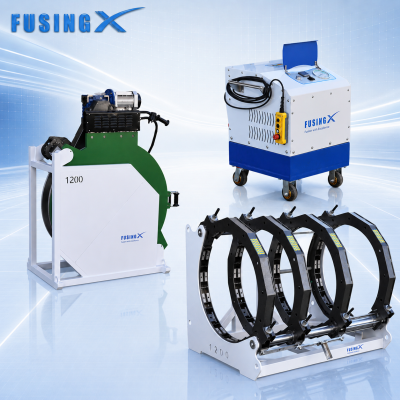
In large-diameter HDPE pipe butt fusion, the first things people usually notice are the obvious ones: the welding range, hydraulic unit, heater plate, facer, and main frame.
These parts are important. They decide whether a machine has the basic capacity to handle large pipe sizes.
But when designing a machine like the FX1200, there is another question that matters just as much:
Can the pipe stay steady through the whole welding process?
For large-diameter work, it is not enough for the clamps to close around the pipe. The pipe needs to remain stable during facing, alignment, heating, changeover, and joining.
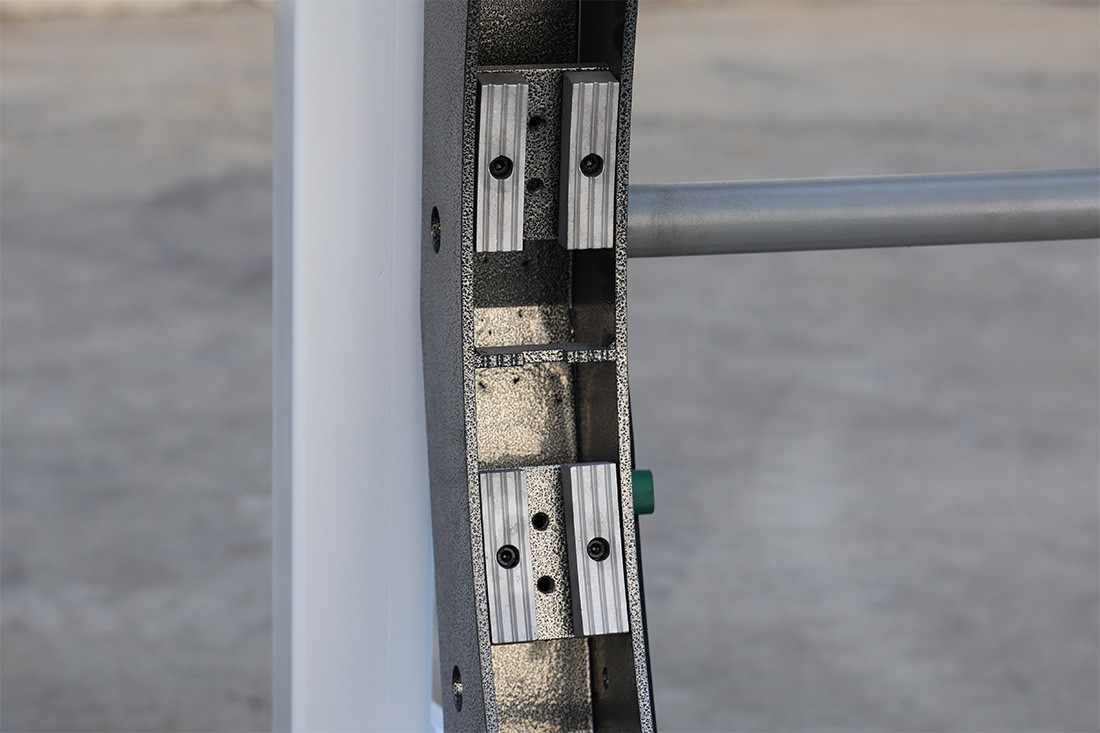
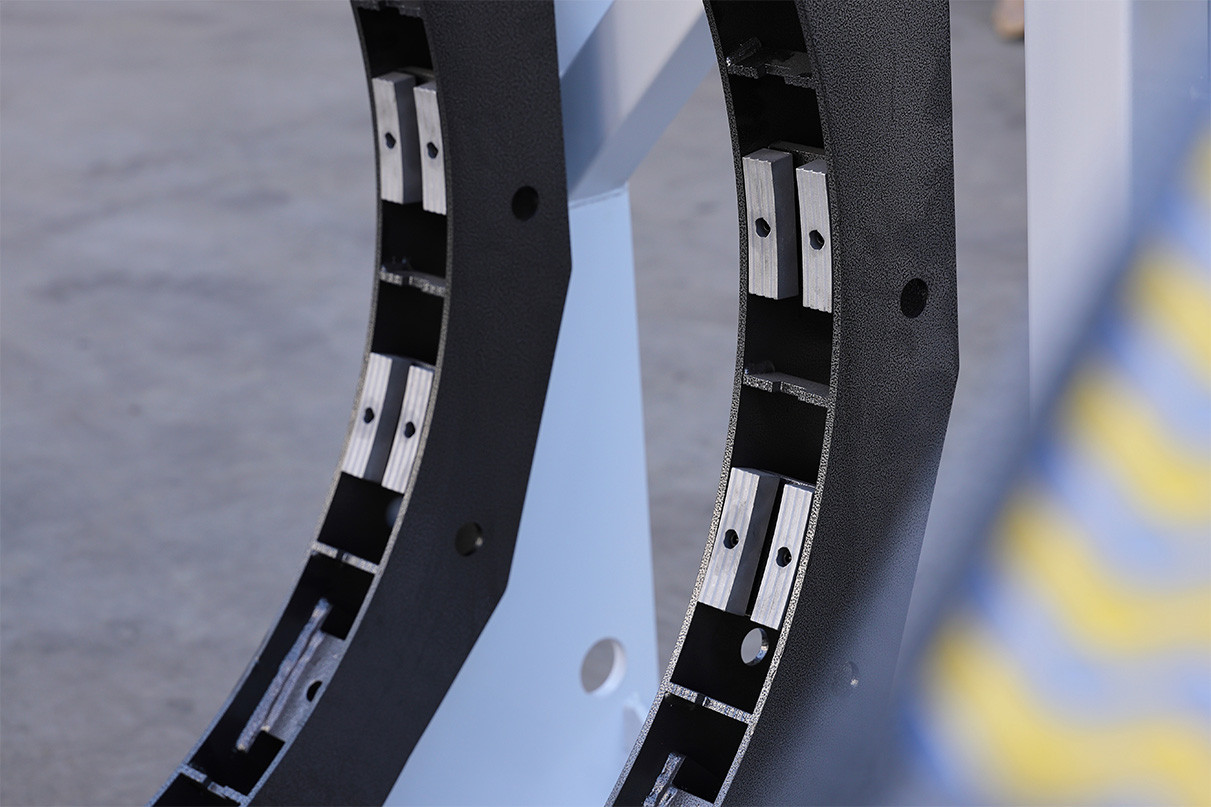
This is why anti-slip pad blocks are used on the clamping structure of the FX1200.
Large-Diameter Pipe Is Not Just a Bigger Version of Small Pipe
From an engineering point of view, a 1200 mm pipe is not simply a larger version of a smaller pipe.
As the pipe diameter increases, the working conditions change. The pipe becomes heavier, harder to move, and more difficult to fine-adjust. The contact condition between the pipe and the clamps also becomes more important.
In real jobsite conditions, the pipe surface may not be perfectly clean or dry. In colder environments, HDPE pipe surfaces may become harder. Some pipes may also have slight outside-diameter differences.
Under these conditions, the clamps need to do more than hold the pipe in place. They need to help the pipe stay stable through every key step of the fusion process.
That is the difference between holding the pipe and holding the pipe steady.
What Problem Do Anti-Slip Pad Blocks Solve?
Anti-slip pad blocks may look like a small detail on the clamping rings, but they are designed for a very practical purpose:
to improve the contact condition between the clamp and the pipe.
With a standard clamping surface, the actual contact area and friction can be affected by the clamp structure, pipe diameter, and pipe surface condition. On small and medium-size machines, this may not be a major issue. But when the pipe size reaches 800 mm, 1000 mm, or 1200 mm, even small movement can become more noticeable.
The anti-slip pad blocks help in three ways.
First, they increase the effective contact area between the clamp and the pipe. Better contact helps distribute the holding force more evenly.
Second, they improve friction. This helps reduce unwanted slipping, slight rotation, or position change during operation.
Third, they support better adaptability under less-than-ideal pipe conditions, such as slightly undersized pipe, harder pipe surface, or a pipe surface that is not perfectly clean.
This is not a decorative feature. It is a working detail designed for real site conditions.
Why This Detail Matters More on FX1200
The FX1200 is built for large-diameter HDPE pipe butt fusion from 630 mm to 1200 mm. In this size range, the clamping system is working under much higher practical demands.
During facing, the facer applies cutting force to the pipe ends. If the pipe is not held firmly enough, the operator may need to spend more time correcting the position.
During alignment, even a small shift can become more difficult to manage because of the pipe size and weight.
During heater insertion, removal, and changeover, a stable pipe position helps keep the operation smoother and more controlled.
During joining, reliable pipe holding supports a more stable movement of the whole process.
For this reason, clamp design on a large-diameter butt fusion machine should not only focus on strength. It should also consider how the pipe actually sits inside the clamps.
The anti-slip pad blocks on the FX1200 are designed around this practical requirement.
The Engineering Thinking Behind a Small Part
When we look at this kind of detail, the first question is not whether it can become a selling point. The real question is whether it solves a real problem in operation.
Many important details of a large-diameter butt fusion machine cannot be fully explained by a parameter table.
A parameter table can tell customers the welding range, heater configuration, and hydraulic system. But it cannot clearly show whether the machine feels stable, controlled, and practical during real operation.
Anti-slip pad blocks belong to this kind of detail.
They do not decide welding quality by themselves. Welding quality still depends on the frame structure, hydraulic control, heating performance, facing result, operation procedure, and site conditions.
But they do improve one important part of the process: the stability of the pipe inside the clamps.
For large-diameter pipe welding, this detail is worth paying attention to.
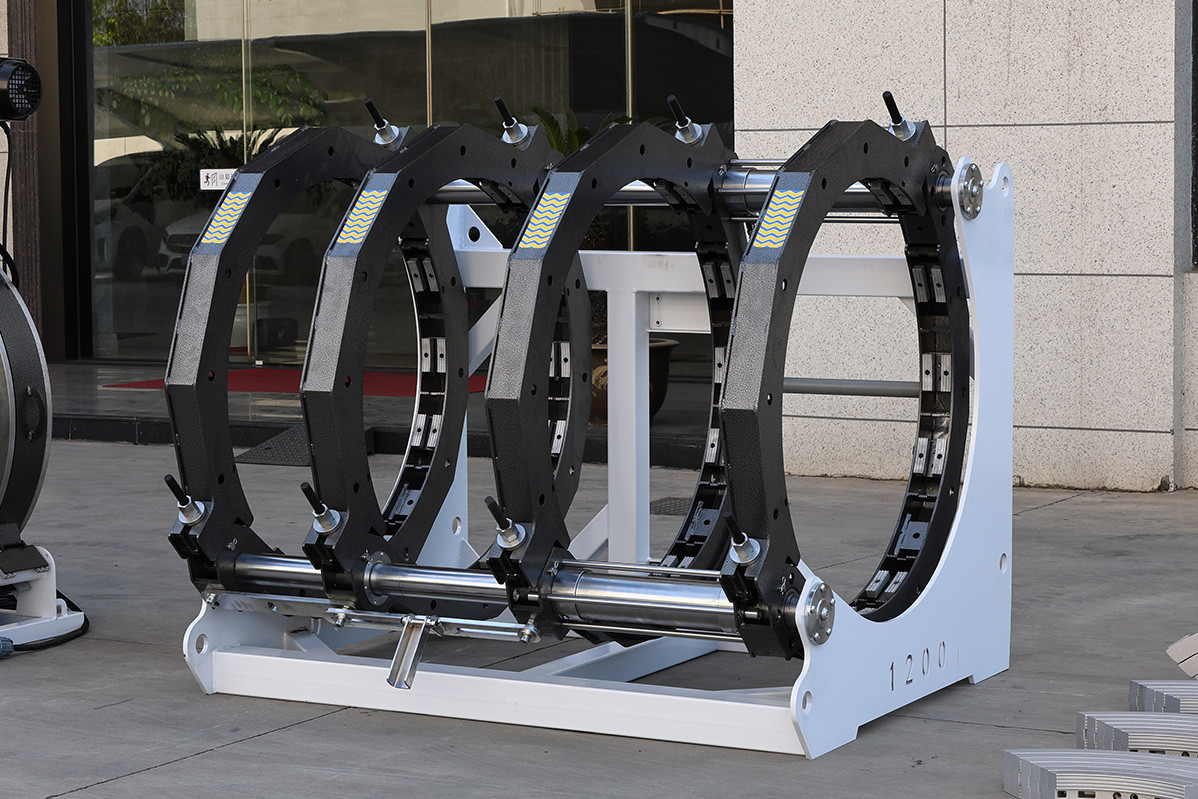
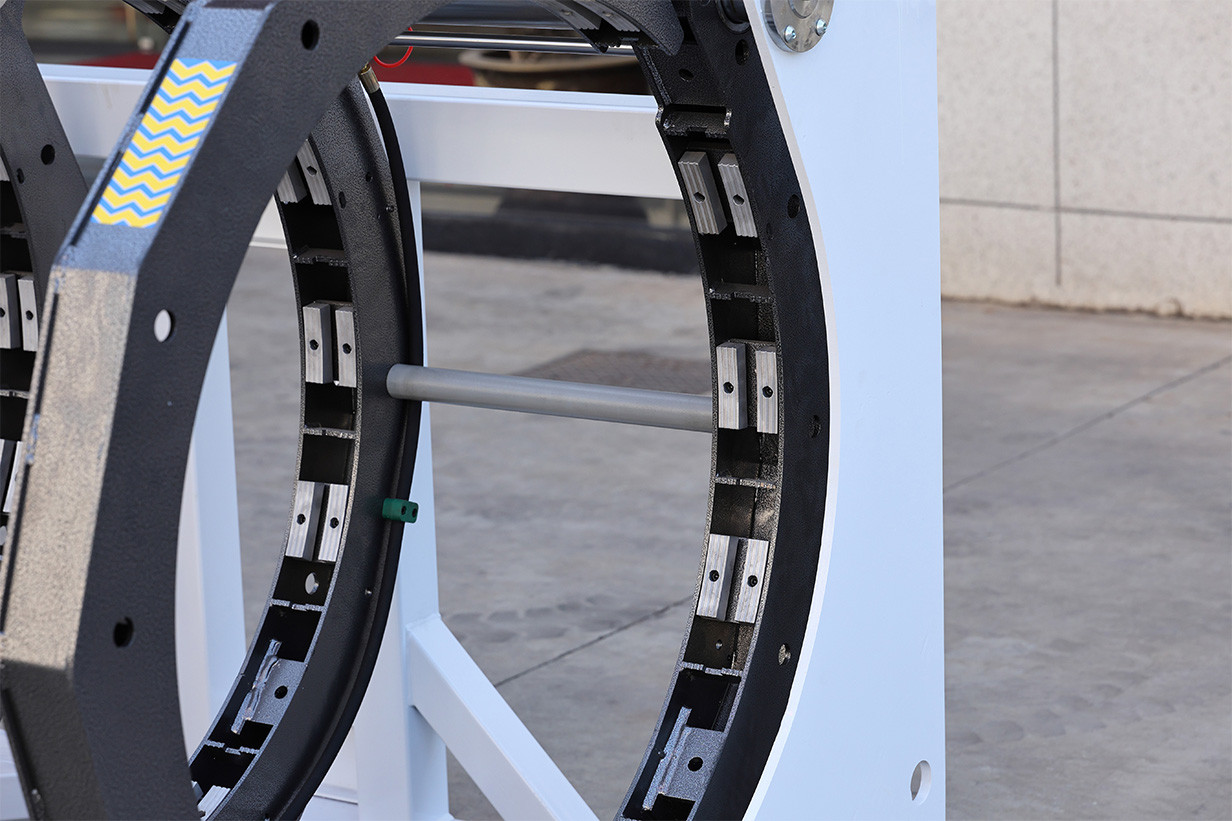
A Closer Look at the FX1200 Clamping Area
In the latest photos of the FX1200, the anti-slip pad blocks can be clearly seen on the clamping rings.
Compared with a full machine photo, these close-up images show a different side of the product. A full machine photo shows the scale of the equipment. A detail photo shows the design thinking behind it.
For customers who have experience with large-diameter HDPE pipe welding, this kind of detail is easy to understand. They know that a machine should not be judged only by its maximum pipe size. It also needs to perform steadily when handling heavy pipe, long operation time, and less-than-perfect site conditions.
The anti-slip pad block is not a large component, but it is designed around a real working need.
Final Thoughts
Designing a large-diameter butt fusion machine is not only about making the machine bigger.
When the pipe size reaches 800 mm, 1000 mm, or 1200 mm, clamping stability, frame rigidity, hydraulic movement, and part coordination all become more important.
On the FX1200, the anti-slip pad block reflects a clear engineering idea:
large-diameter pipe should not only be held in the clamps — it should stay steady throughout the welding process.
This detail may not be as visible as the hydraulic unit or heater plate, but experienced operators often notice it in real use. For a machine built for large-diameter HDPE pipe projects, this kind of detail is part of its engineering value.