FX500 Butt Fusion Machine Operation Process
Last week we visited the factory to perform a complete operation test of the FX500 butt fusion machine, using it to weld a section of HDPE pipe. The welding process was carried out following the standard procedure, and the final joint showed a clean and uniform weld bead. Overall, the result was very satisfactory.
During the operation, we also recorded the entire welding process in order to better demonstrate how the FX500 performs during real machine operation.
Machine Setup Before Welding
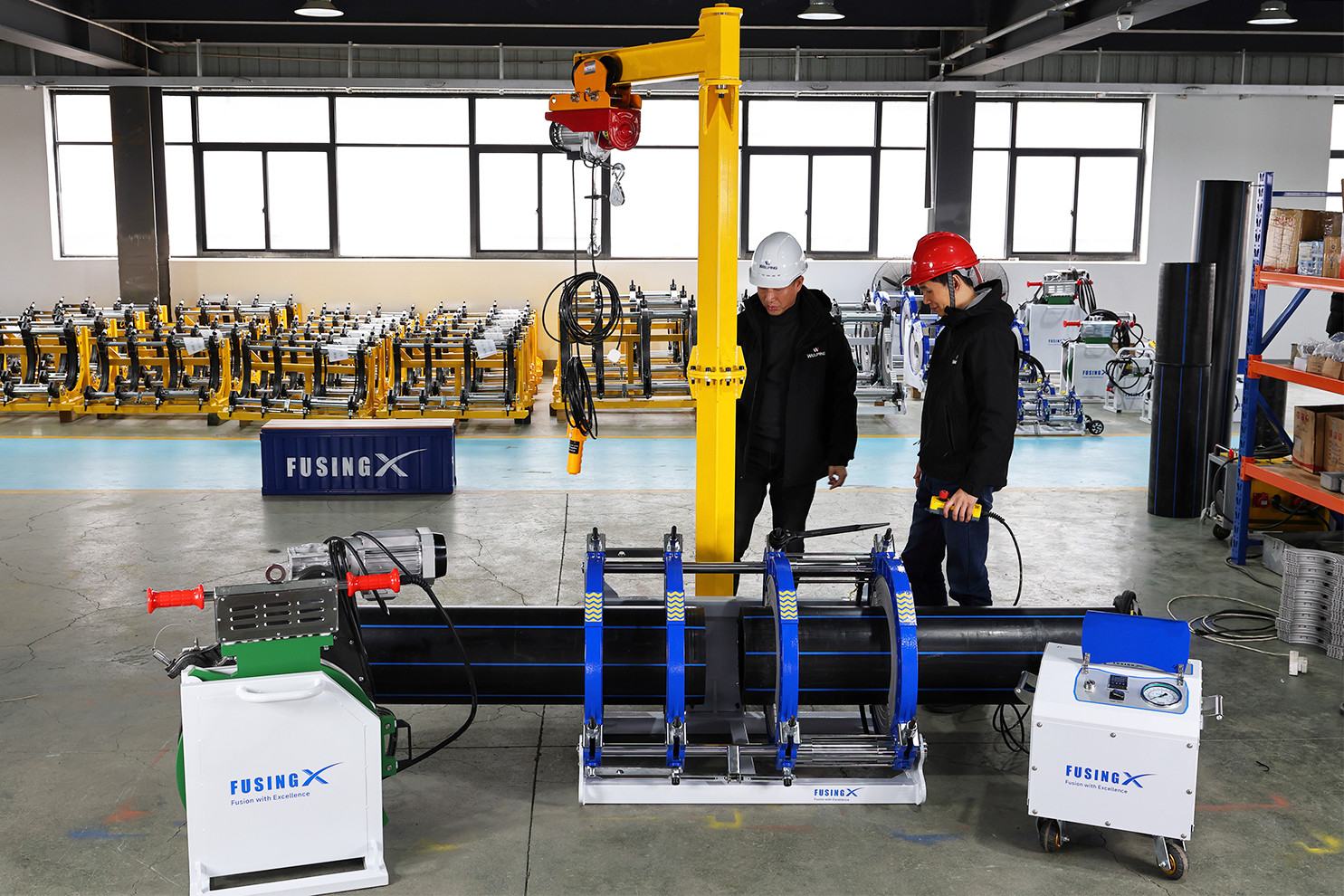
Before welding begins, the machine and pipe need to be prepared properly.
The HDPE pipes are first placed in the machine frame and secured using the clamp inserts. Proper alignment is important at this stage to ensure that both pipe ends remain on the same axis, which provides stable conditions for the following facing and welding steps.
Next, the key components required for welding are prepared, including the facer and the heating plate. The hydraulic unit, power supply, and control system are also checked to confirm that the equipment is ready for operation.
Once everything is prepared, the welding procedure can begin.
Pipe Facing
Facing is a critical step in the butt fusion process. The facer is installed to machine the pipe ends.
The purpose of facing is to remove the oxidized surface layer and ensure that both pipe ends become flat and parallel. Properly prepared pipe ends are essential for achieving a high-quality weld.
After the facing process is completed, the pipe ends are inspected and any remaining chips or debris are cleaned.
Heating Stage
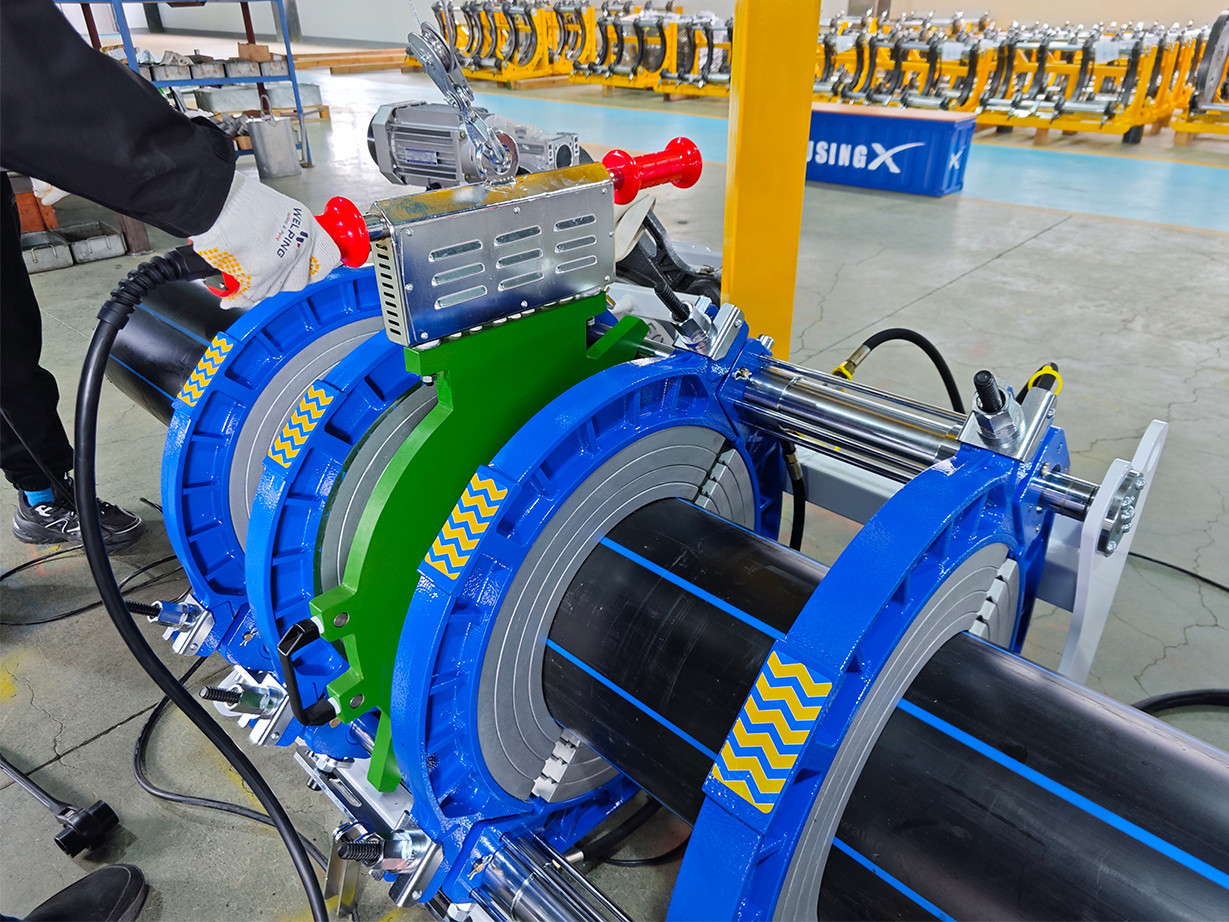
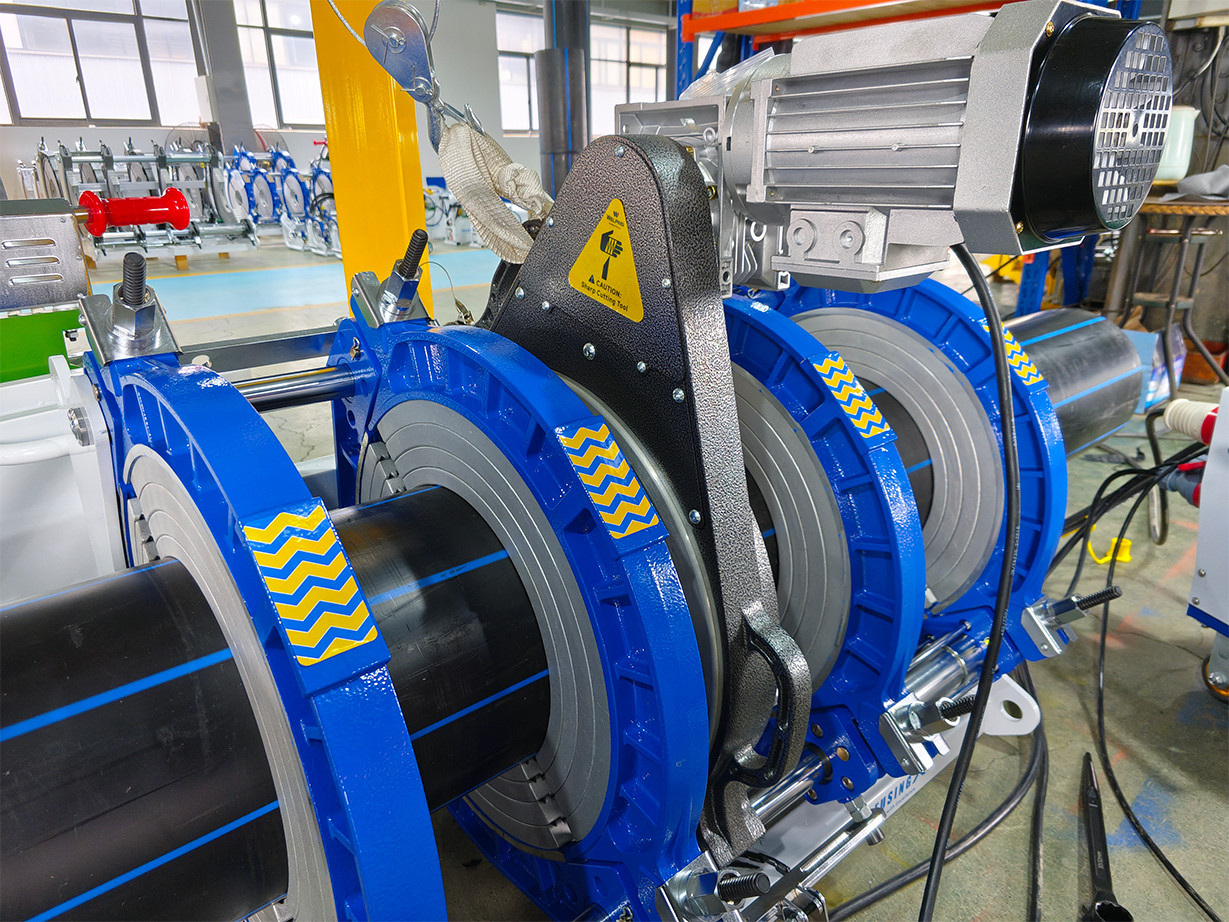
After facing, the heating plate is inserted between the two pipe ends.
At this stage, the heating plate raises the pipe surface temperature to the required welding level. As the material softens, a uniform bead begins to form along both pipe ends.
Consistent heating across both surfaces is important for achieving reliable fusion results.
Heater Removal and Pipe Fusion
When the heating time is completed, the heating plate is removed quickly and the pipe ends are brought together.
The hydraulic system then moves the machine frame forward to apply the correct fusion pressure. Maintaining stable pressure and proper alignment during this stage is essential.
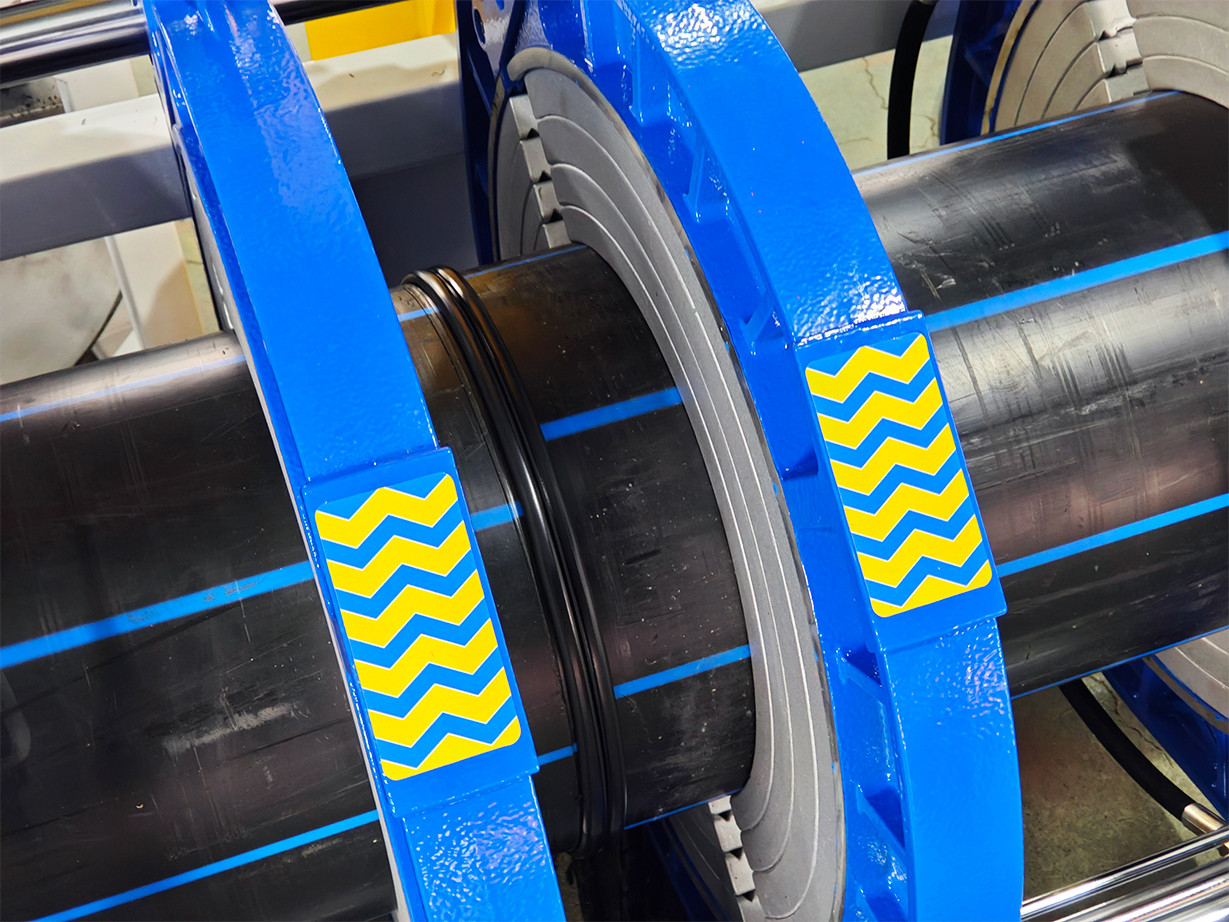
Under controlled pressure, the softened pipe ends merge together and form the welded joint.
Cooling Process
After fusion, the pressure is maintained while the joint cools naturally.
The cooling time must follow the recommended welding parameters to ensure that the joint solidifies properly and maintains structural integrity.
Only after the cooling stage is completed can the clamps be released and the pipe removed from the machine.
Welding Result
During this operation, the FX500 butt fusion machine completed the entire welding process smoothly. The final weld bead appeared uniform and continuous, indicating a stable welding result.
This workshop operation also provided a clear demonstration of how the FX500 performs during HDPE pipe butt fusion welding.
If you would like to see the complete operating process of the FX500 butt fusion machine, please click here to read the full article.