How to Choose a High-Quality Butt Fusion Welding Machine for HDPE Pipes
In HDPE pipe construction, the butt fusion welding machine plays an important role. It affects not only work efficiency, but also welding stability and long-term jobsite performance.
Different projects require different types of machines. A small repair job may need a compact and simple unit. Regular pipeline construction may require better stability and easier operation. For professional projects, buyers often look more closely at frame strength, pressure control, heating stability, operation comfort, and long-term reliability.
So, when choosing a butt fusion welding machine for HDPE pipes, it is not enough to look only at the maximum welding size or the price. The better question is: Can this machine match the real working conditions and keep performing well over time?
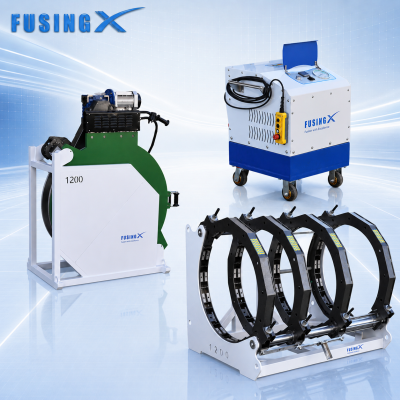
For professional pipe welding work, a high-quality butt fusion machine should be considered as a complete working system.
1. Start with the Real Pipe Size Range
The first thing to check is the pipe size range.
Many buyers focus on the maximum welding size first. That is important, but it is not the whole story. In real projects, one machine is often used for several pipe sizes, not only the largest one.
For example, medium and large HDPE pipe projects may involve sizes such as 315mm, 500mm, 630mm, 800mm, 1000mm, or 1200mm. For larger projects, different reducer inserts may also be needed.
Before choosing a machine, it is useful to check:
· What is the maximum welding size?
· What pipe sizes are most often used in your projects?
· Are the required reducer inserts included?
· Is it easy to change between different pipe sizes?
· Can the inserts support the pipe steadily?
· Can the machine cover both current and future project needs?
A suitable machine should not only handle the largest pipe size. It should also cover the pipe sizes that are used most often on site.
2. Understand the Machine Type and Project Requirements
Butt fusion welding machines can be grouped by operation method and automation level. One point is worth making clear: hydraulic describes the driving and pressure control method, while semi-automatic and fully automatic describe the automation level. They should not be treated as the same type of classification.
In the market, common types include:
· Manual butt fusion machines
· Standard hydraulic butt fusion machines
· Semi-automatic hydraulic butt fusion machines
·Fully automatic hydraulic butt fusion machines
Manual machines are usually used for small pipe sizes, light-duty work, or repair jobs. Standard hydraulic machines are more common in medium and large pipe projects because the hydraulic system helps move the carriage and control welding pressure.
For projects that require better process control, more consistent operation, or welding data records, semi-automatic or fully automatic hydraulic machines may be a better choice.
When choosing the machine type, consider:
· Pipe size range
· Welding frequency
· Operator experience
· Project quality requirements
· Whether welding records are needed
· Whether the project needs stronger process control
· Budget and long-term use plan
For professional pipe welding projects, a higher-level hydraulic butt fusion machine is often more valuable when stability, operation, and long-term performance matter.
3. Frame Strength Is the Base of Stable Welding
The frame is the foundation of a butt fusion welding machine. As the pipe size increases, the pipe becomes heavier, and the machine needs to work under higher load.
During a welding cycle, the machine needs to clamp the pipe, move the carriage, align the pipe ends, complete facing, hold the heating plate, change over, and maintain welding pressure. Each step puts stress on the frame, guide rods, clamps, and base structure.
If the frame is not strong enough, the machine may feel unstable during operation. Pipe movement may become less smooth, alignment may become harder, and pressure holding may be affected.
When checking the frame and structure, pay attention to:
· Whether the frame is solid and stable
· Whether the guide rods are strong enough
· Whether the clamps are suitable for the pipe size
· Whether key parts are well machined
· Whether the machine is assembled firmly
· Whether large machines are designed for heavy-duty use
A high-quality machine is not only about a good appearance. More importantly, its structure should be able to handle real jobsite conditions.
4. Pipe Clamping Should Not Be Ignored
Butt fusion welding is often discussed as a heating and joining process. But before that, the pipe must be held steadily.
If the pipe moves during facing, heating, carriage movement, or pressure holding, alignment and welding stability may be affected. This is especially important for large pipes, because they are heavier and harder to control.
A good clamping system should provide enough support area. It should not rely only on strong pressure at a small contact point. The design, contact area, machining accuracy, and installation method of the inserts all affect pipe support.
For large-diameter machines, anti-slip design is also worth checking. Anti-slip pads can increase the contact area and friction between the pipe and the clamp. This helps reduce unwanted pipe movement during carriage movement and pressure holding.
In real jobsite work, some pipes may have slight size differences, ovality, or may be a little smaller than the standard size. If the clamping system allows proper adjustment, the machine will be easier to use in these situations.
Good clamping does not only mean holding the pipe tightly. It means keeping the pipe steady through the whole welding process.
5. The Facer Affects Pipe End Preparation
Pipe end facing is one of the most important steps before butt fusion welding. A clean and flat pipe end helps make the following alignment, heating, and joining process easier to control.
So, when choosing a butt fusion welding machine, the facer should not be overlooked.
You can check:
· Whether the facer runs smoothly
· Whether the drive system is stable
· Whether it has enough strength for the pipe size
· Whether it is easy to install and remove
· Whether the locking structure is reliable
· Whether it remains stable after long-term use
· Whether the facing process is easy to control
For medium, large, or thick-wall pipes, the facer needs to work under higher load. A stable drive system, reliable locking design, and user-friendly operation can reduce repeated adjustment and help improve pipe end preparation.
The facer is not just a cutting tool. It prepares the pipe ends for the whole welding process.
6. Heating Plate Stability and Temperature Uniformity Matter
The heating plate is one of the key parts of a butt fusion welding machine.
For HDPE pipe welding, reaching the set temperature is only the basic requirement. What matters more is whether the heating plate can keep stable heat and provide uniform heat transfer across the surface.
This becomes more important on larger heating plates. If the temperature difference across the plate is too large, the pipe ends may not be heated evenly.
When checking the heating plate, consider:
· Whether the plate body is thick and stable
· Whether the coating quality is reliable
· Whether the heating elements are suitable for long-term use
· Whether the temperature control is clear and easy to use
· Whether temperature inspection is carried out before delivery
· Whether the plate can keep good temperature uniformity on a large surface
A good heating plate is not only about the number shown on the temperature controller. It should transfer heat steadily and evenly during real welding work.
7. Hydraulic Control Affects the Working Experience
For medium and large butt fusion machines, the hydraulic system has a direct effect on operation.
It affects carriage movement, drag pressure, facing movement, welding pressure buildup, and pressure holding. A stable hydraulic system makes the whole process easier to control.
In real use, you can check:
· Whether the carriage moves smoothly
· Whether pressure builds up clearly
· Whether pressure holding is stable
· Whether facing movement is easy to control
· Whether the control panel is simple and clear
· Whether the pressure display is easy to read
· Whether the operator can observe the welding area conveniently
For large-diameter machines, the operating position is also important. The operator often needs to check pipe alignment, facing result, heating changeover, and pressure holding. If the control method is more flexible, such as with remote control, the operator can stand in a better position to observe the joint area.
A good hydraulic system is not only about having enough pressure. It should also provide smooth movement, clear control, and practical operation.
8. Choose According to Real Jobsite Conditions
Different jobsites require different machine configurations.
Before choosing a butt fusion welding machine, it is better to think about the real working environment, not just the product specifications.
For example:
· Is there enough space for operation?
· Does the machine need to be moved often?
· Is lifting equipment available on site?
· Will the machine be used outdoors for long periods?
· Are the pipes large-diameter or thick-wall pipes?
· Is the welding frequency high?
· Does the project require welding records or traceability?
· Are the operators experienced?
For small repair work, portability may be more important. For municipal, mining, or industrial pipeline projects, frame stability, hydraulic control, pipe clamping, and long-term reliability are often more important.
The right machine is not decided only by the highest configuration. It is decided by how well the machine matches the real working conditions.
9. Manufacturer Capability and Long-Term Support Also Matter
A butt fusion welding machine is not a short-term consumable product. Medium and large machines are usually expected to work for many years, so the manufacturer behind the product also matters.
A high-quality butt fusion machine usually depends on stable machining, assembly, and inspection processes. Frame machining, clamp production, hydraulic system assembly, heating plate inspection, facer adjustment, and final assembly all affect machine performance.
When choosing a supplier, it is worth checking:
· Whether the manufacturer has experience with different machine sizes
· Whether the factory has stable machining and assembly processes
· Whether key parts are inspected
· Whether common spare parts are available
· Whether different configurations can be supplied
· Whether technical communication and after-sales support are available
· Whether the supplier can support long-term delivery
For contractors, a reliable machine can reduce jobsite problems. For distributors, stable supply, spare parts, and technical support are also important for long-term cooperation.
A low price may look attractive at first. But if product consistency, spare parts, or technical support are not stable, the long-term cost may become higher.
10. A High-Quality Machine Should Work as a Complete System
When choosing a butt fusion welding machine for HDPE pipes, it is better not to judge the machine only by maximum welding size, one single feature, or price.
A more practical way is to look at the machine as a complete working system:
· Does the pipe size range match your project?
· Is the frame strong and stable?
· Can the machine hold the pipe securely?
· Is the facer suitable for long-term use?
· Does the heating plate provide stable and even heat?
· Is the hydraulic system smooth and clear to control?
· Is the operation convenient for jobsite observation?
· Does the machine match real working conditions?
· Can the manufacturer provide long-term support?
For professional HDPE pipe projects, the value of a machine is not only in completing one weld. It is in working steadily, comfortably, and reliably over time.
If you are looking for a high-quality butt fusion welding machine for HDPE pipe projects, you can learn more about the FusingX FX series. The FX series is designed with a focus on structural stability, practical operation, and long-term performance for professional pipe welding applications.
📘 Read More from Product Knowledge
• Back to Product Knowledge
• Next: Why a Lifting Crane Matters for Large-Diameter Butt Fusion Welding