Anti-Slip Pad Blocks: A Practical Design Improvement on Large FX Butt Fusion Machines
During butt fusion welding of large-diameter HDPE pipes, pipe stability during clamping and movement has a direct impact on welding quality.
In real applications, the larger the pipe diameter and the lower the ambient temperature, the more likely the pipe is to slip during positioning.
To address this issue, FusingX developed the anti-slip pad block design.
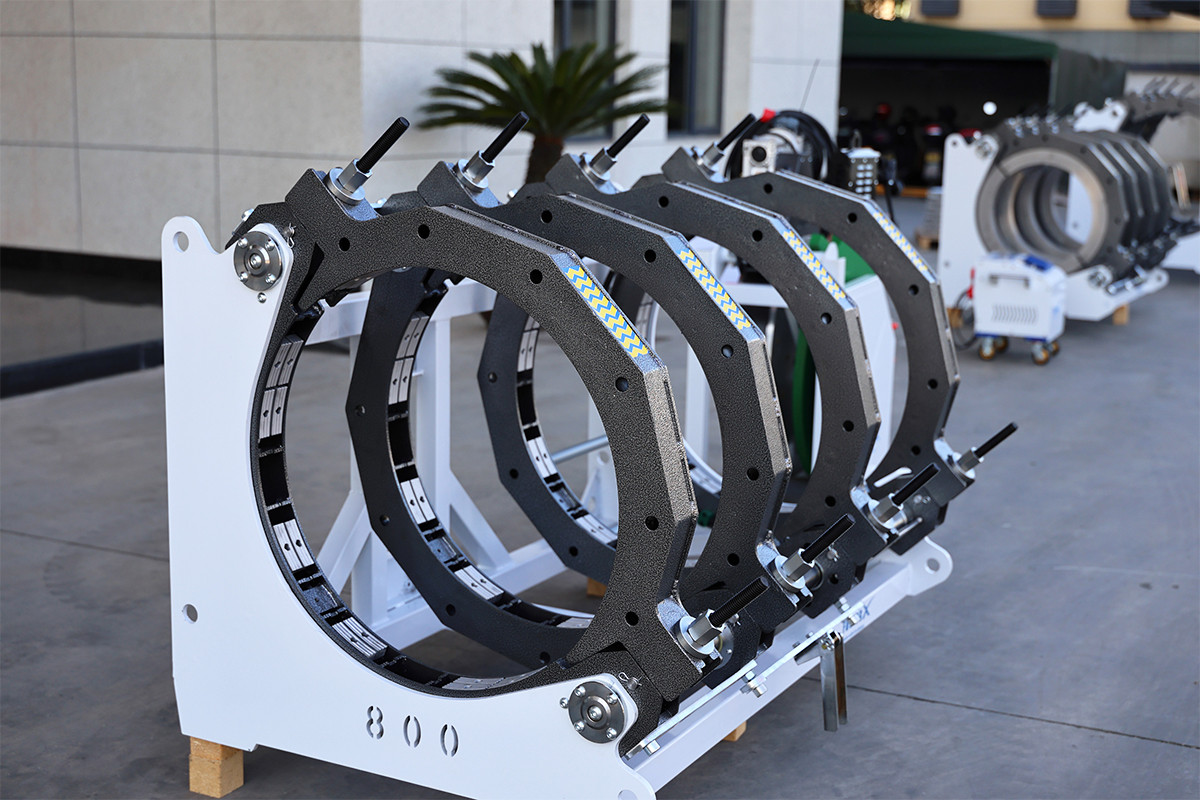
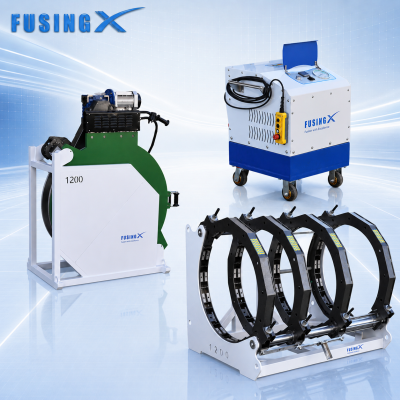
This design is currently used on large FX series butt fusion machines, including FX800 and above.
Increased Contact Area for Better Stability
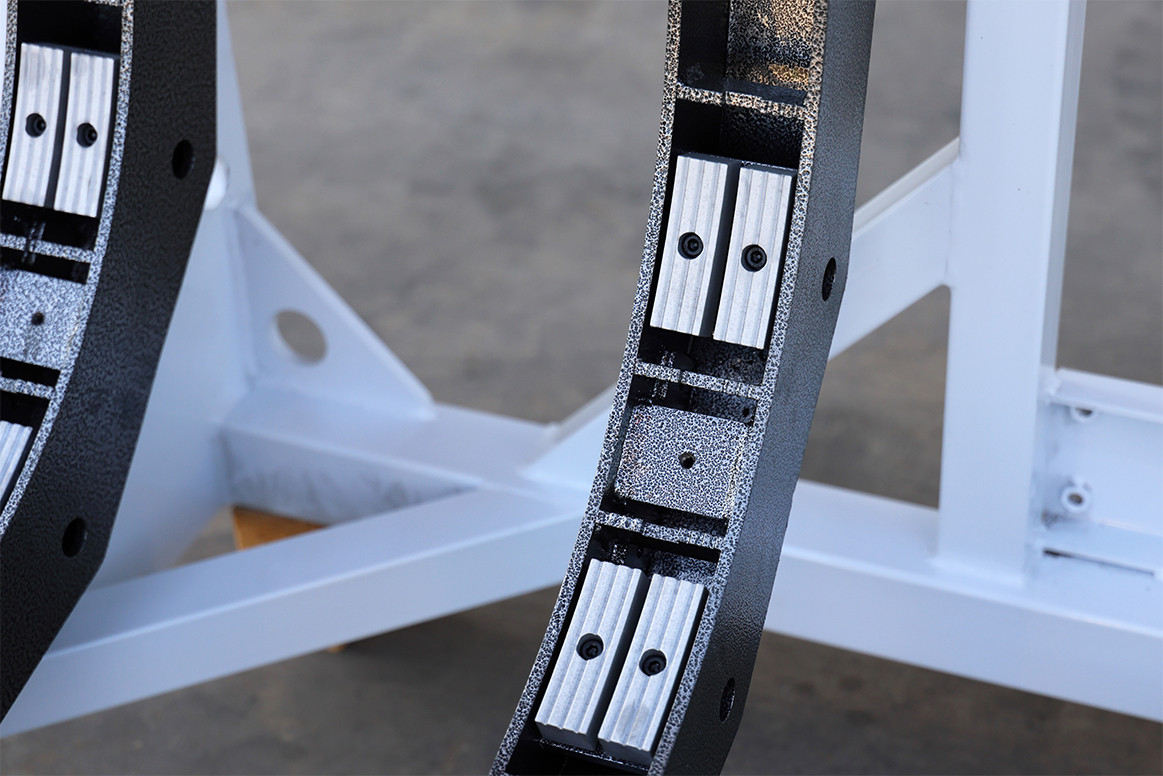
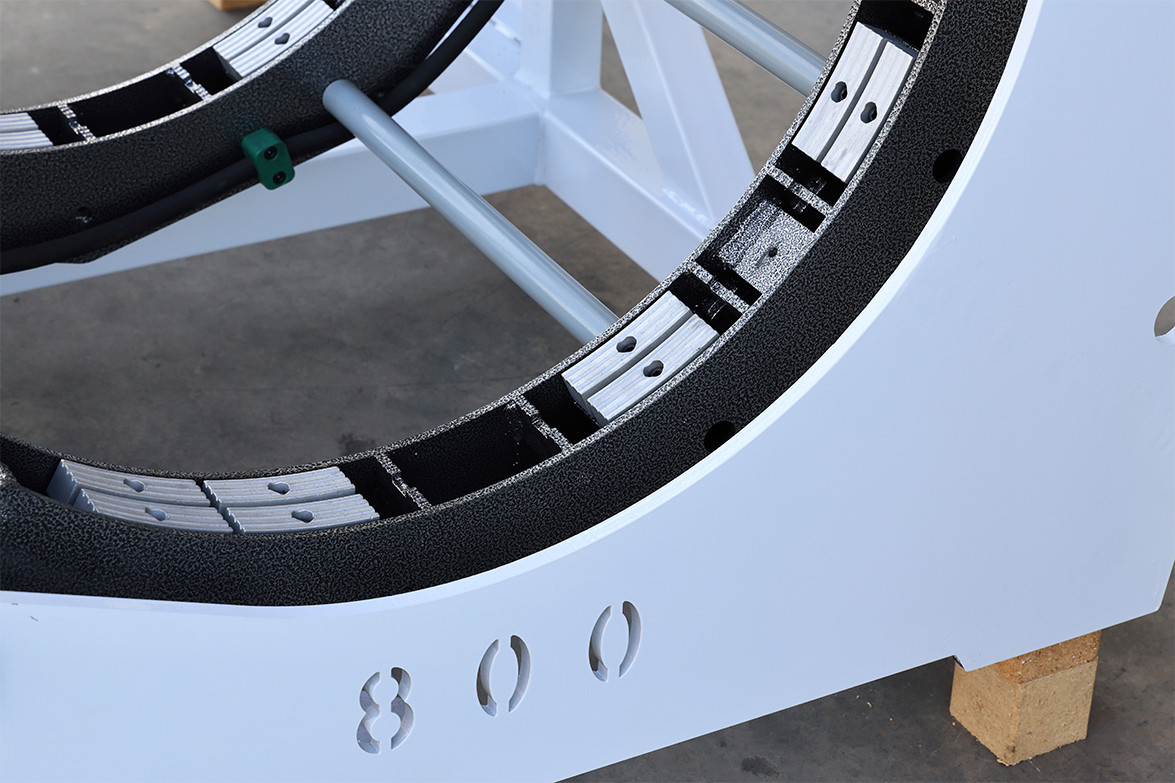
The anti-slip pad blocks are installed on the inner ring of the machine and the outer surface of the clamping shoes.
Compared with a smooth contact surface, this design increases the effective contact area between the machine and the pipe.
With a larger contact area, friction is improved.
During pipe movement and alignment, the pipe is less likely to slip, resulting in more stable operation.
This effect becomes more noticeable in low-temperature environments, where HDPE pipes tend to become harder.
Adjustable Design for Slight Non-Standard Pipes
The anti-slip pad blocks allow fine adjustment.
When pipe diameter deviations are small, the pad blocks can be adjusted to better match the pipe surface.
This helps reduce clamping issues caused by minor size variations and makes the machine more adaptable in real working conditions.
Applied on FX800 and Above Models
The anti-slip pad block design is not intended for small-diameter machines.
It is developed specifically for large FX series butt fusion machines, mainly FX800 and above, where pipe size and load conditions place higher demands on clamping stability.
At present, this design is used only on large FX models.
Summary
The anti-slip pad blocks do not change the basic welding process.
Instead, they improve pipe stability by modifying the clamping contact interface.
This is the first time FusingX has applied such a design on large-diameter butt fusion machines, and it represents a practical improvement developed from real on-site experience.