Why Smarter Welding Data Matters in Butt Fusion?
A finished fusion joint can tell us a lot, but it cannot show everything that happened during the welding cycle.
Was the pressure stable? Did the heater temperature fluctuate? Was there an unusual change at a particular stage?
When pressure, temperature and other process information can be monitored, recorded and reviewed, operators and project teams gain a much clearer picture of each fusion cycle.
That is why modern butt fusion data logging is gradually moving beyond simply recording parameters. The real value lies in making welding data easier to understand, manage and use.
1. Why Record Butt Fusion Data?
Butt fusion is a process, not just a finished joint.
From facing and heating to changeover, fusion and cooling under pressure, each stage has its own operating requirements. Pressure and temperature are among the most important variables throughout that process.
Traditionally, operators rely on pressure gauges, temperature displays and their own experience to judge whether everything is proceeding normally.
Those methods remain important.
But they mainly tell us what is happening right now.
Once a fusion cycle is finished, another question becomes important:
What actually happened during that joint?
A data logging system helps answer that question by keeping a record of key welding information.
Instead of leaving only the final joint for inspection, it also leaves behind data that can be reviewed, stored and managed later.
2. A Number Shows the Value. A Curve Shows the Process.
Imagine the display shows:
Pressure: 42 bar
That number is useful. It tells the operator the pressure at that moment.
But it does not tell us whether the pressure stayed close to 42 bar for the previous minute, gradually changed, or dropped suddenly before returning.
A trend curve tells a different story.
When pressure and temperature are displayed as real-time trend curves, the operator can see how those values change throughout the fusion cycle.
This makes it easier to notice questions such as:
· Is the pressure remaining stable?
· Is the heater temperature fluctuating?
· Does an unusual change appear during a particular stage?
Instead of watching one number after another, the operator can see the overall pattern much more quickly.
A number shows the value. A curve shows the process.
For us, this is one of the most useful directions for the next generation of butt fusion data systems.
3. Welding Data Should Not Stay Inside the Machine
Recording data is only useful if that data can be used afterwards.
On a real project, welding records may need to be:
· stored;
· exported;
· backed up;
· printed;
· archived;
· reviewed later.
If hundreds or even thousands of records remain locked inside one device, their practical value becomes limited.
That is why data management should be considered together with data recording.
Larger storage capacity allows more fusion records to be kept on the device.
USB export makes it easier to transfer records to a computer or external storage device.
Additional backup options, such as a TF card or USB drive, provide more ways to preserve project information.
Regular backups are still good practice, particularly on long projects or where large numbers of joints are being recorded.
Printing can also matter.
Some projects may need one individual welding record, while others require a complete group of records for documentation or acceptance procedures. Supporting both individual and batch printing makes that process much easier.
The important question is therefore not simply:
How much data can the logger record?
A better question is:
How easily can that data be used afterwards?
4. Why Should the Display Always Stay Beside the Hydraulic Unit?
Most conventional data loggers are physically connected to the hydraulic unit.
That arrangement makes sense. The signals are collected near the machine, so the display stays there as well.
But the operator does not always stay in one place.
This becomes particularly obvious with larger butt fusion machines.
During operation, someone may need to check the pipe ends, observe carriage movement, move to another side of the machine, or simply work from a position with a clearer view.
If the display is fixed beside the hydraulic unit, the operator has to return to that position whenever welding data needs to be checked.
A different approach is to separate:
data acquisition from data display.
The acquisition module can remain connected to the hydraulic system while the display becomes a portable terminal.
The operator can then carry the screen around the working area much like a small tablet, while continuing to view live pressure, temperature and other welding information.
The data stays connected. The operator stays mobile.
This can be particularly useful around large-diameter fusion equipment or job sites where the operator frequently changes position.
That does not mean a wired system is obsolete.
A direct wired connection is simple, stable and familiar. For many users, it remains the right solution.
The point is not that wireless is always better. The point is that different job sites may benefit from different ways of accessing the same welding information.
5. Can a Data Logger Do More Than Record?
Traditionally, a data logger is mostly an observer.
The machine performs the fusion cycle, and the logger records what happens.
But once a system already understands the current welding stage and continuously receives pressure, temperature and other process information, it can potentially do more than simply watch.
It can also provide process guidance.
For an experienced fusion operator, this may serve as a useful reminder.
For someone less familiar with the machine or procedure, step-by-step guidance can help answer practical questions:
What happens next?
Which stage are we in now?
Is there an important step that should not be missed?
What should be checked after the fusion cycle is complete?
This changes the role of the system.
Instead of only:
Record what happened
it can also begin to:
Help the operator understand what should happen next.
Such guidance does not replace proper training, an approved fusion procedure or operator experience.
But it can make the process easier to follow.
6. Serviceability Matters More Than It Looks
When people compare electronic systems, they often start with visible features.
How large is the screen?
How many records can it store?
Can it print reports?
Those questions matter.
But industrial equipment raises another question that becomes more important over time:
What happens when the system needs attention two or three years later?
If the software is completely fixed, even a relatively small change may become difficult.
If the hardware is tightly integrated and difficult to access, maintenance can also become unnecessarily complicated.
A more serviceable data logging system may therefore include capabilities such as:
· remote software updates;
· online troubleshooting;
· remote technical support;
· easier hardware maintenance;
· calibration and adjustment options.
These functions are not always the most eye-catching ones on a product page.
But when a problem occurs, they can become some of the most valuable.
A good industrial system should not only work well on the day it leaves the factory.
It should also remain practical to support later.
7. Different Fusion Machines Need Flexible Configuration
A data logging system does not operate independently from the fusion machine.
It reads information from the machine and its sensors.
But not every butt fusion machine has exactly the same hydraulic configuration.
For example, the effective cylinder area can vary between machines. Pressure and temperature sensors may also require calibration during commissioning, servicing or replacement.
For this reason, a more flexible system may need technical settings such as:
· hydraulic cylinder parameter configuration;
· pressure calibration;
· temperature calibration.
These are not settings that an operator should need to change during everyday welding.
They are primarily useful during machine configuration, commissioning and technical service.
The ideal balance is simple:
Keep everyday operation easy, while giving technicians enough depth when configuration or calibration is required.
8. What Are We Testing Now?
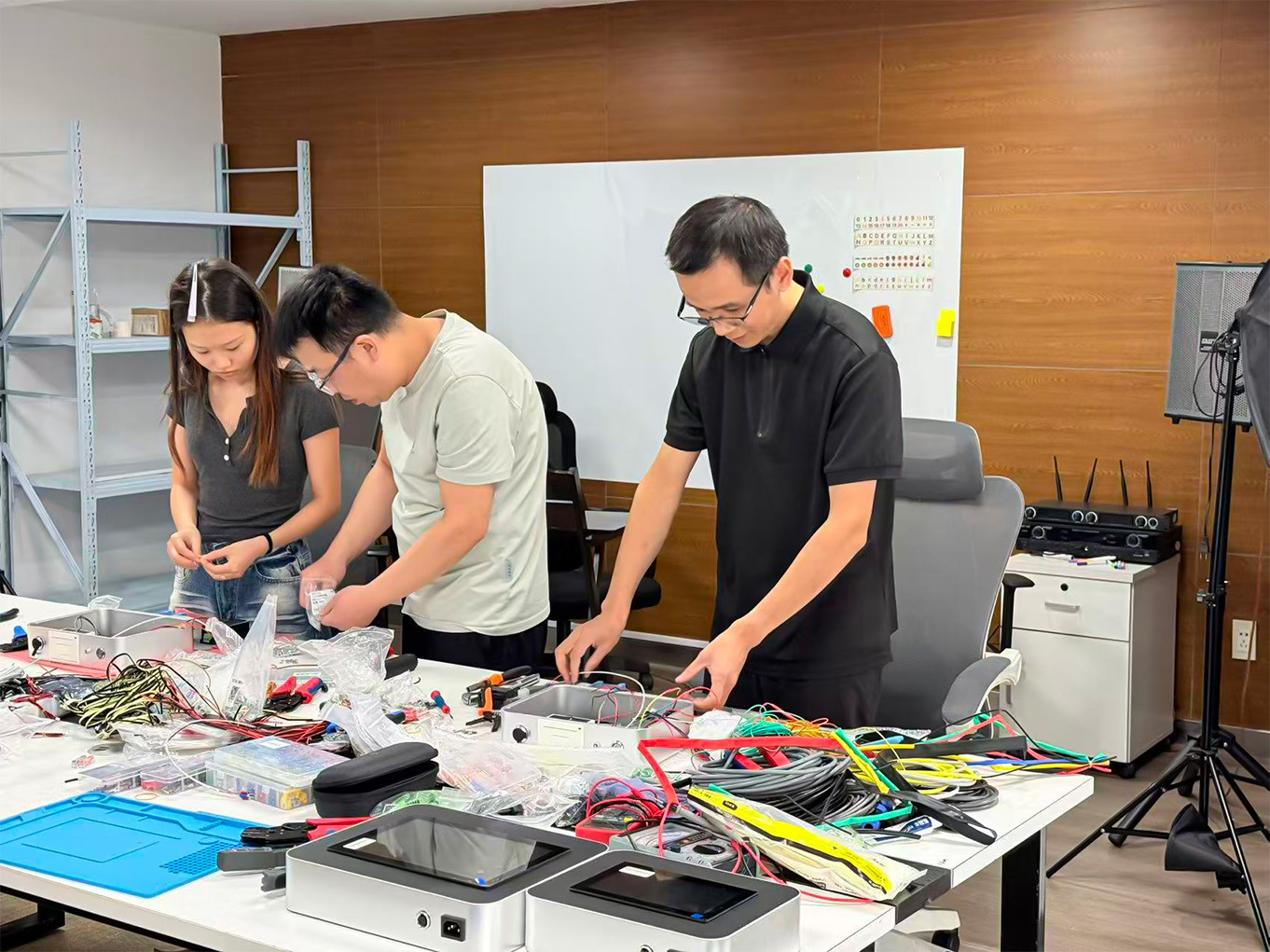
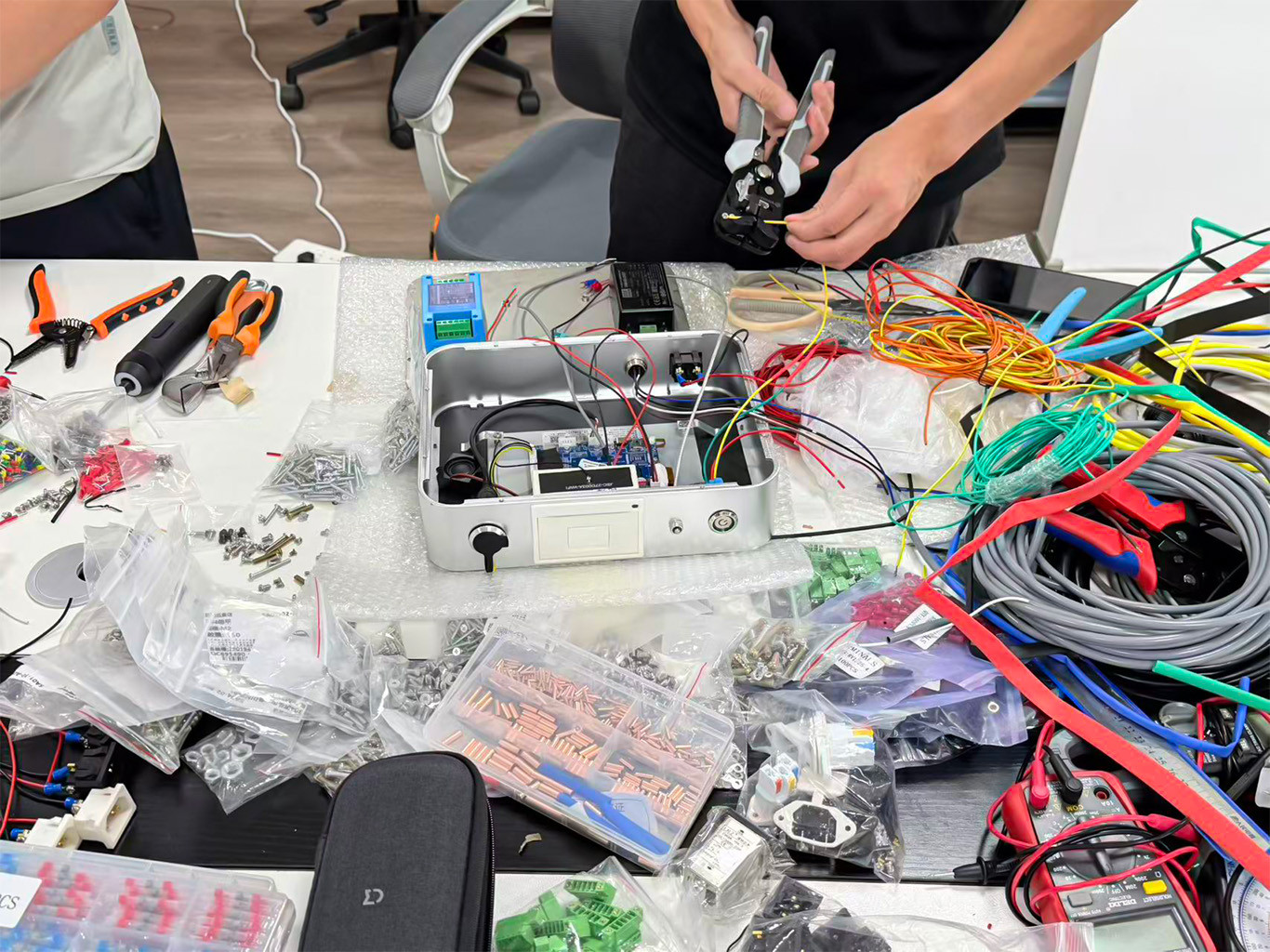
Based on these ideas, FusingX is currently evaluating a new smart data logging system in real customer orders.
Several units have already moved into installation and delivery, but we still regard this as a field-validation stage rather than a final product launch.
What interests us now is what happens after the system leaves the development bench.
Will it remain stable in real working conditions?
Are the trend curves genuinely useful to operators?
Is data export convenient enough for actual project workflows?
Does a portable display make a meaningful difference around larger machines?
Is the operating guidance clear?
Which functions will customers use every day, and which ones will rarely be opened?
Those questions cannot be answered fully in the workshop.
They need real use.
At the moment, these systems are still being assembled, configured, tested and checked one unit at a time.
The installation process itself also teaches us something.
A system that performs well should not only be easy to operate. It should also be practical to assemble, service and maintain.
Customer feedback from these first applications will help us decide what should remain, what should change and what still needs more work before the system is formally introduced.
9. Better Data Should Ultimately Serve Better Fusion Work
A smart data logger cannot make a good fusion joint by itself.
The welding procedure, machine condition, pipe preparation and operator execution still matter most.
But better visibility can make the fusion process easier to understand.
Better records can make each joint easier to trace.
Better data management can make project documentation easier to handle.
And a system that is easier to update, configure and support can make long-term use more practical.
So when we talk about smarter butt fusion data logging, the goal is not simply to collect more numbers.
The goal is to make welding data more useful.