Product Knowledge | What Is Drag Pressure in HDPE Butt Fusion?
During hydraulic butt fusion of HDPE pipes, the machine must overcome resistance from the carriage and the pipe before it can bring the pipe ends together.
Drag pressure is the minimum hydraulic pressure needed to overcome this resistance and move the carriage and clamped pipe toward the opposing pipe end, while the two ends remain apart.
It reflects the resistance under the actual clamping and pipe-support conditions and must be accounted for when setting the machine pressure.
What Causes Drag Pressure?
Resistance to movement mainly comes from two sources:
· Resistance within the machine: friction in the moving carriage, guide components, hydraulic cylinder seals, and other moving parts.
· External pipe resistance: friction between the pipe and the ground, supports, or rollers, as well as resistance caused by the pipe arrangement.
Drag pressure is therefore not a fixed value determined solely by pipe diameter or SDR. Pipes of the same size can have different drag pressures depending on pipe length, support arrangements, and site conditions.
Why Must Drag Pressure Be Included in the Fusion Pressure Setting?
The machine’s pressure gauge displays hydraulic pressure, while the fusion procedure usually specifies interfacial pressure — the pressure applied to the pipe’s joining surfaces. These values are not interchangeable.
The specified interfacial pressure must first be converted into theoretical hydraulic fusion pressure using the pipe’s annular cross-sectional area and the machine’s effective cylinder area. The measured drag pressure is then added as required by the fusion procedure:
Required gauge pressure = Theoretical hydraulic fusion pressure + Measured drag pressure
Here, “theoretical hydraulic fusion pressure” means the calculated value before drag compensation.
For example, if the theoretical hydraulic fusion pressure is 30 bar and the measured drag pressure is 5 bar, the required gauge pressure is:
30 + 5 = 35 bar
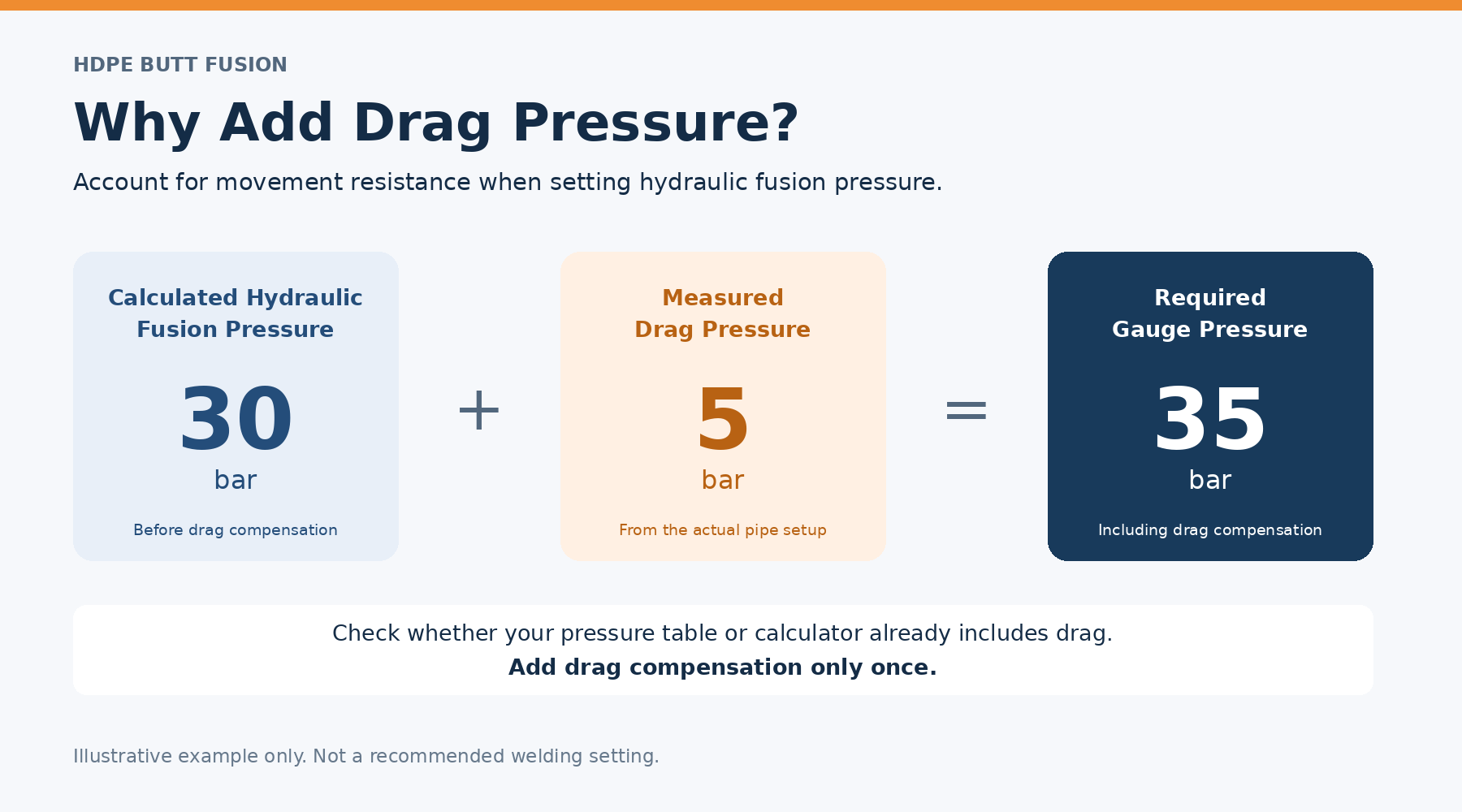
These figures illustrate the calculation only; they are not recommended settings for a particular pipe. If the machine is set to only 30 bar, part of the available force will be used to overcome resistance, potentially leaving insufficient force at the joining surfaces.
When using a pressure table, calculator, or automatic control system, check whether the displayed value already includes drag compensation. Do not add it twice.
How Is Drag Pressure Measured?
Measure drag pressure with the pipe clamped in the machine and the external supports arranged as they will be during fusion.
1. Keep the Pipe Ends Apart
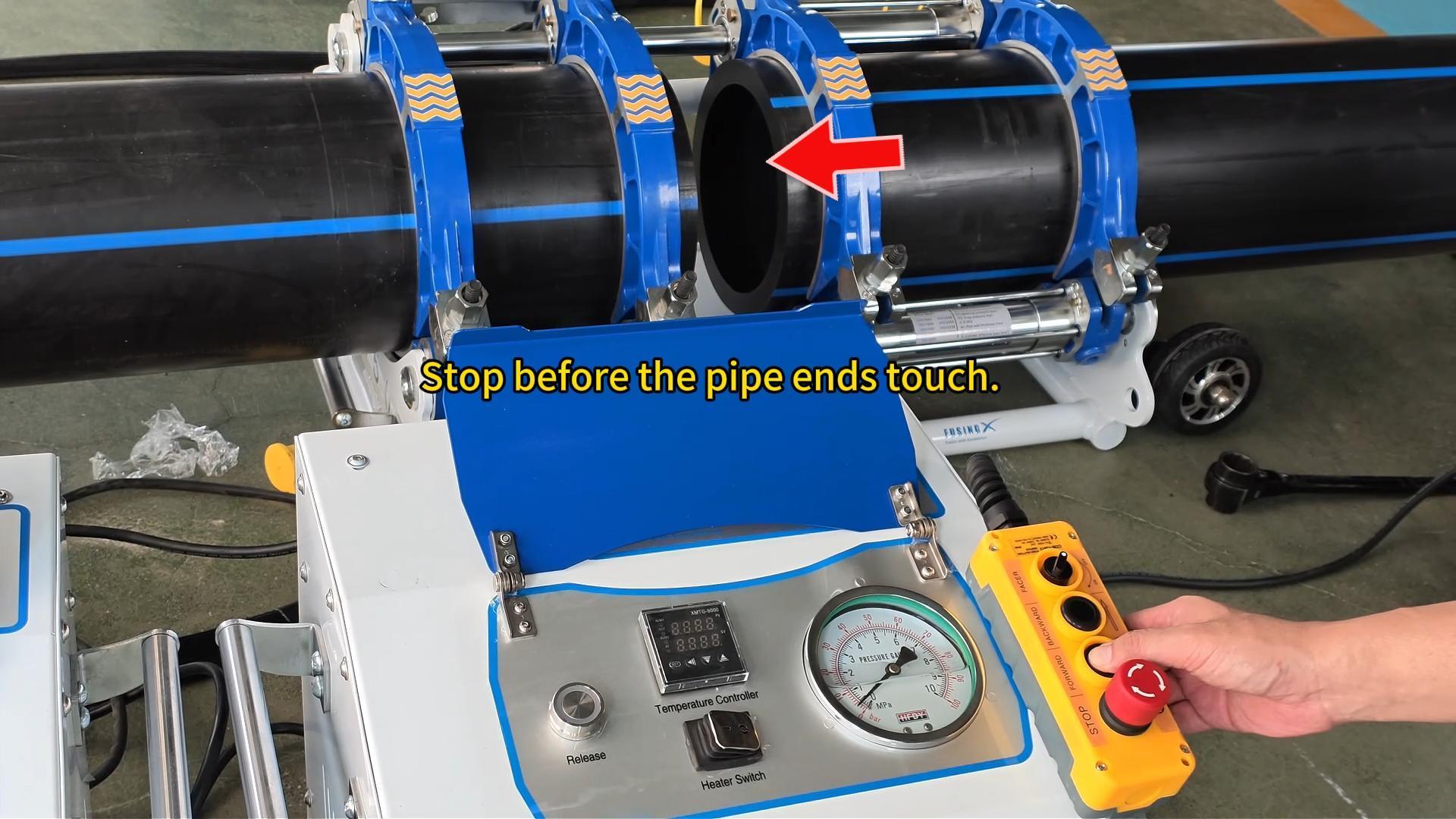
Leave enough clearance between the pipe ends to complete the measurement before they touch. Neither end should press against the facer or heater plate.
Once the pipe ends touch, the gauge reading may include force acting between them and cannot be treated directly as drag pressure.
2. Start with a Low Pressure Setting
Set up the hydraulic controls according to the machine’s operating manual. Operate the carriage in the closing direction and gradually increase the pressure while watching for movement.
An arbitrary pressure reading taken while the pipe is moving is not necessarily the drag pressure. Excessive pressure will also move the pipe, but it does not represent the minimum pressure needed.
3. Read and Record the Pressure as Specified
Measurement methods vary between machines. Some require the pressure reading at the first sign of movement. Others require reducing the pressure after movement begins until the carriage continues moving slowly.
Follow the machine’s instructions for the adjustment sequence and reading point, and complete the measurement before the pipe ends touch.
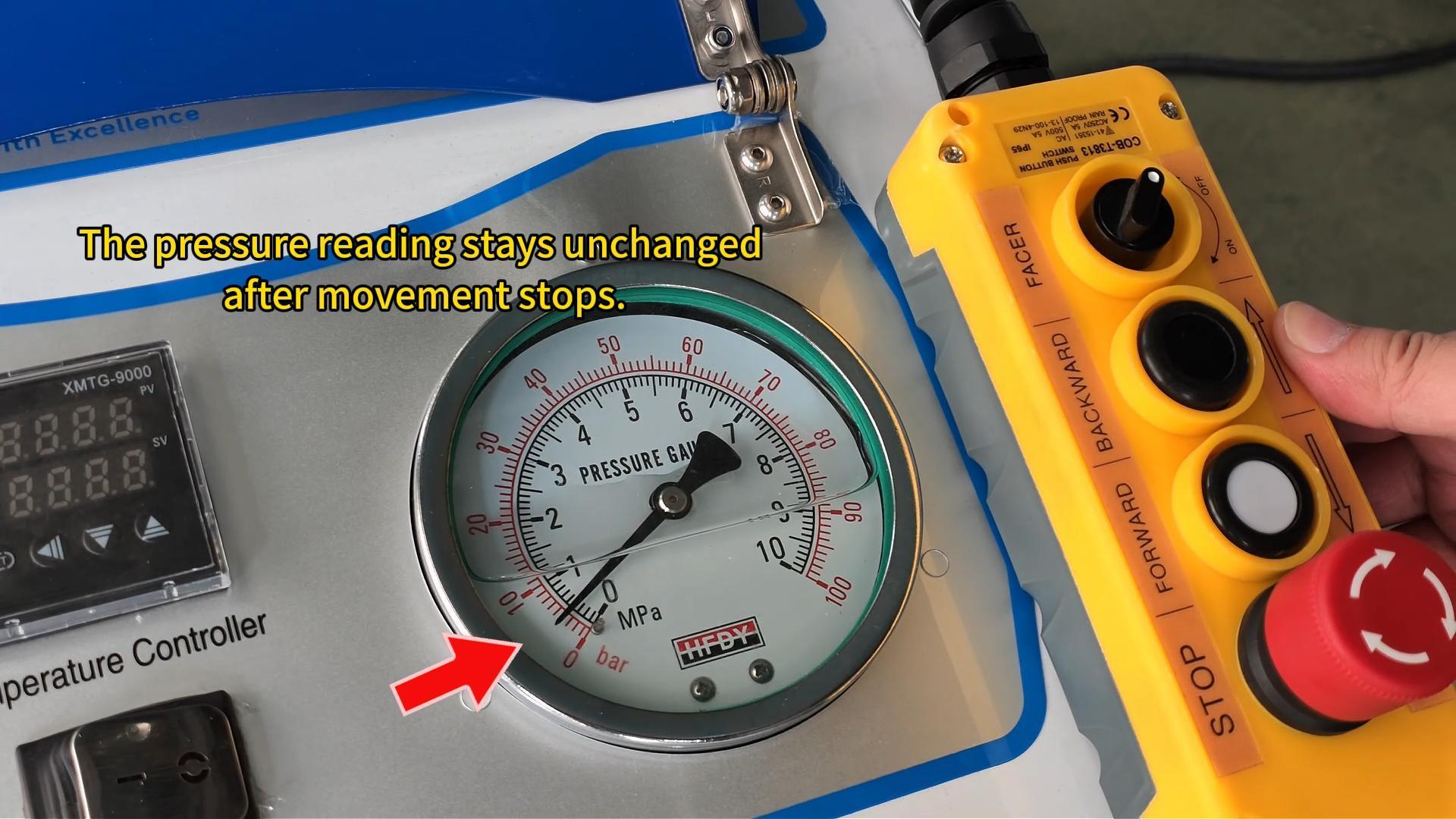
Gauge behavior after the carriage stops can also vary between hydraulic systems. A reading taken after stopping should not be assumed to represent drag pressure without following the specified measurement procedure.
What Should You Check If Drag Pressure Is High?
If drag pressure is unusually high or unstable, check the sources of resistance first.
| Item | What to Check |
| Pipe support | Is a substantial length of pipe dragging on the ground? Are additional roller supports needed? |
| Support position and height | Is the pipe misaligned, or is the support height restricting axial movement? |
| Roller condition | Can the rollers turn freely? |
Pipe arrangement | Is the pipe caught on an obstruction or subjected to sideways pulling? |
Carriage components | Are the guides dirty, binding, or in need of maintenance? |
Properly positioned roller supports and good pipe alignment can reduce external resistance. After making adjustments, measure drag pressure again before setting the required machine pressure.
Frequently Asked Questions
Can the Same Drag Pressure Be Used for Every Pipe of the Same Size?
Do not treat one measurement as a permanent setting. Measure or verify drag pressure before each fusion as required by the applicable procedure. Recheck it whenever pipe length, support positions, or site arrangements change.
Is Lower Drag Pressure Always Better?
Reducing resistance through better pipe support and machine maintenance is beneficial. However, the recorded drag pressure must reflect actual conditions. Using an artificially low value can result in insufficient drag compensation.
Is the Same Pressure Used During Heat Soak?
Do not carry the bead-up or joining pressure setting directly into the heat-soak stage. Heat soak has different pressure requirements. Set the pressure according to the applicable fusion procedure and the machine’s operating instructions.
Video
Watch the video below to see how drag pressure is measured on an FX Series butt fusion machine.