Product Knowledge | Gear-Driven vs. Chain-Driven Facers: What’s the Difference?
In butt fusion welding, the facer trims both pipe ends to prepare them for heating and joining. Its motor and blades matter, but so does the drive system inside the unit. Two common designs use gears or a chain to turn the facer plates.
Both can do the job. The main differences appear in how consistently they run over time and what they need in maintenance.
Gear-Driven Facers: Consistent Rotation, Less Adjustment
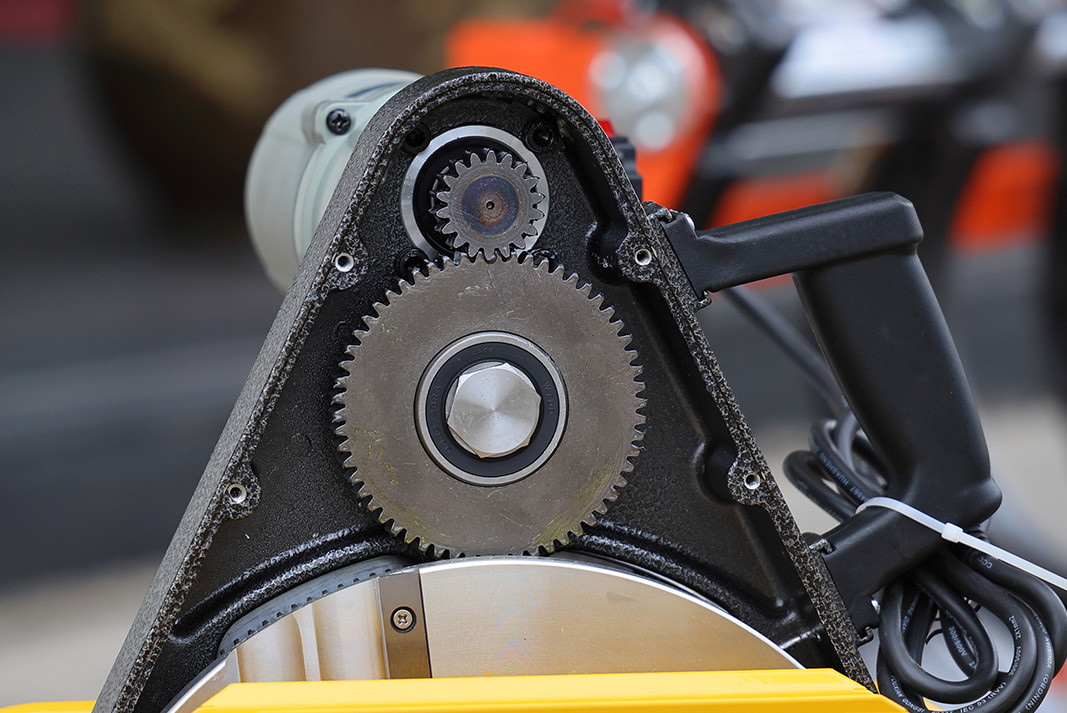
A gear-driven facer transfers power through meshing gears. This provides efficient, steady transmission and helps the facer plates rotate evenly during cutting.
Because there is no chain, operators do not need to check or adjust chain tension, and there is no risk of a chain coming off. With proper manufacturing, assembly and lubrication, the gears can provide a long service life and help the facer maintain consistent performance over time.
Chain-Driven Facers: Chain Condition Matters
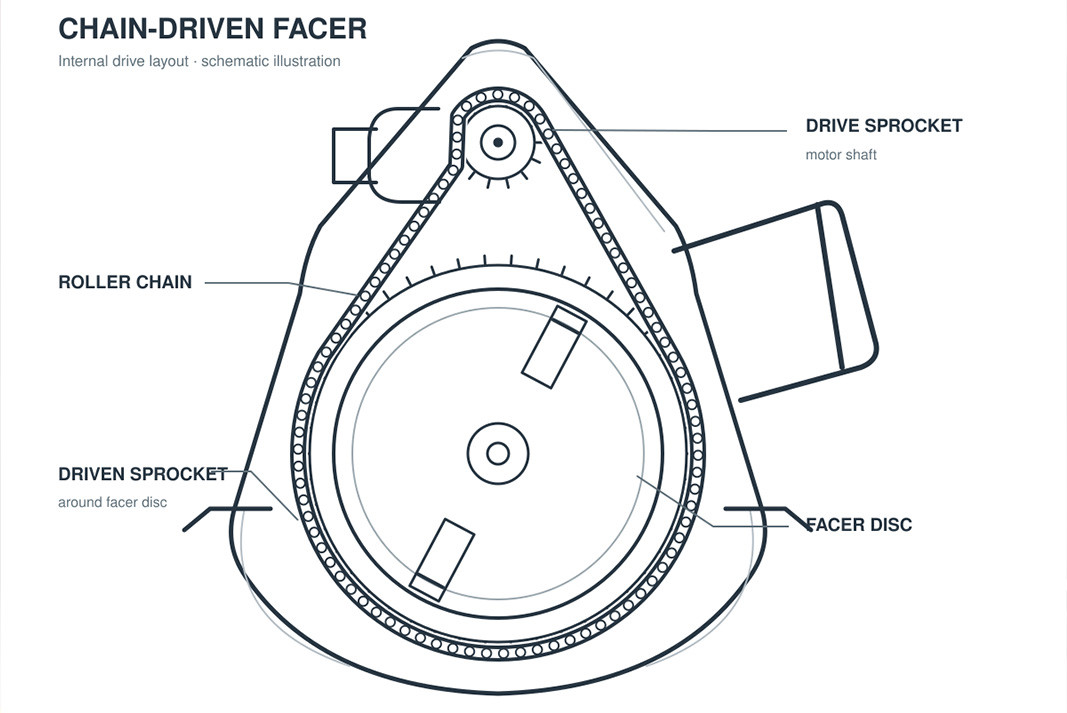
A chain-driven facer transfers power through a chain and sprockets. It can perform the same facing task, but the chain may loosen or wear with use, so its tension and condition need to be checked.
If the chain becomes too loose, or a sprocket or tensioning component develops a problem, the chain may skip or come off during facing. Keeping it correctly tensioned and lubricated is therefore an important part of maintenance.
| Gear-driven facer | Chain-driven facer | |
| Power transmission | Meshing gears | Chain and sprockets |
| Operation | Even rotation and steady transmission | Depends in part on chain tension and condition |
| Maintenance | No chain adjustment; gears and bearings still need inspection and lubrication | Chain tension, lubrication and wear need attention |
Potential issue | Gear or bearing wear | A loose or worn chain may skip or come off |
For a machine used frequently throughout the day, a gear-driven facer can reduce the need for adjustment and avoid interruptions caused by chain issues. When considering a chain-driven facer, it is worth checking how the chain is tensioned and how easily it can be inspected or replaced.
The drive system is only one part of facer quality.
Motor performance, blade condition, facer plate design and overall build quality also affect the result. The most useful check is to see the facer working on the pipe sizes and wall thicknesses you use, then inspect whether both pipe ends are cut cleanly and evenly.