How to Evaluate PE Pipe Butt Fusion Joint Quality: Understanding Fusion Bead Profiles
PE (polyethylene) pipe butt fusion is one of the most widely used joining methods for large-diameter PE pipeline systems.
By heating the pipe ends until the PE material reaches a molten state and then applying controlled pressure, the two pipe sections are fused together to form a strong and reliable joint.
This joining method is widely used in:
· Municipal water supply pipelines;
· Gas distribution systems;
· Mining and slurry transportation projects;
· Industrial piping applications.
The quality of a butt fusion joint depends on multiple factors, including pipe condition, welding parameters, equipment performance, and operator experience.
During field installation, the appearance of the fusion bead is one of the most direct ways to evaluate the quality of a completed butt fusion joint.
Although the final performance of a joint should be verified through professional testing methods, visual inspection of the bead profile can help operators quickly identify potential issues and adjust the welding process when necessary.
Visual Guide to PE Butt Fusion Joint Bead Profiles
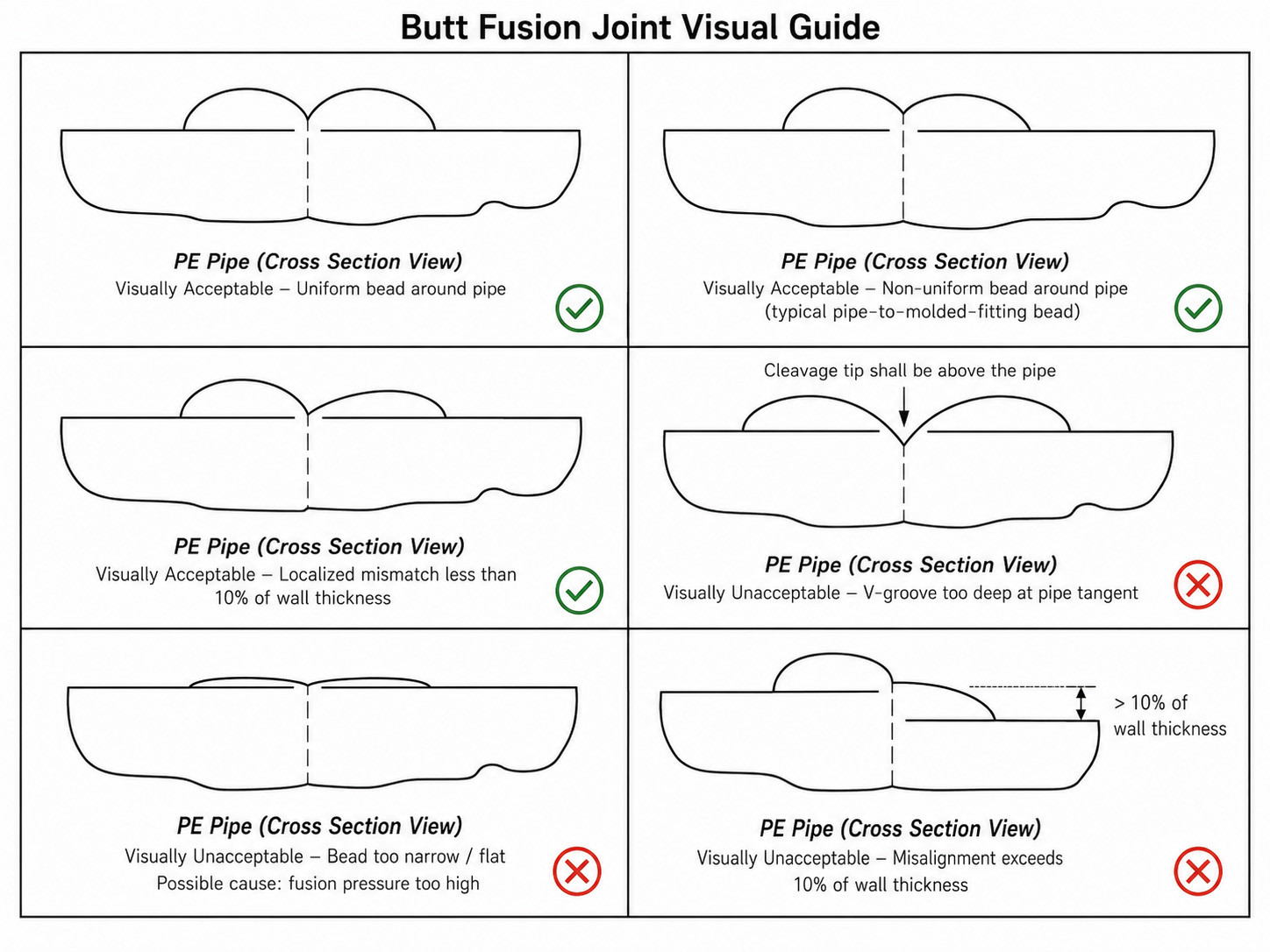
PE Butt Fusion Joint Visual Guide — Acceptable and Unacceptable Bead Profiles
A properly formed fusion bead usually indicates that the pipe ends were heated and joined under suitable welding conditions, with proper alignment maintained throughout the process.
However, in real pipeline projects, bead appearance may vary due to differences in pipe materials, wall thickness, and installation conditions.
Therefore, the quality of a butt fusion joint should not be judged by a single visual feature alone. Bead appearance should be evaluated together with welding parameters, equipment stability, and actual site conditions.
What Does a Good PE Butt Fusion Joint Look Like?
Continuous and Uniform Bead Formation
A properly fused PE pipe joint normally creates a continuous bead around the entire circumference of the pipe.
A good bead profile typically shows:
· Continuous bead formation on both sides of the joint;
· Balanced and consistent bead shape;
· Clear fusion area at the center;
· No visible cracks, gaps, or abnormal deformation.
This usually indicates:
· Proper heating of the pipe ends;
· Good material flow during fusion;
· Stable welding pressure control;
· Proper pipe alignment.
A uniform bead is one of the most common visual indicators of a well-executed butt fusion joint.
Slightly Uneven Bead Formation Can Still Be Acceptable
In actual pipeline construction, the fusion bead does not always appear perfectly symmetrical.
Variations may occur due to:
· Different PE pipe manufacturers;
· Differences in material properties;
· Minor wall thickness variations;
· Different melt flow characteristics;
· Pipe end preparation conditions.
As long as:
· The fusion area is properly formed;
· The bead remains continuous;
· No obvious defects are present;
the joint may still meet the required quality expectations.
Limited Misalignment Within the Allowable Range
During installation, slight misalignment between two pipe ends can sometimes occur.
This condition is commonly referred to as misalignment.
Minor misalignment may be acceptable if it remains within the allowable limit.
In general:
Misalignment should not exceed 10% of the pipe wall thickness.
For example:
If the pipe wall thickness is 30 mm, the allowable misalignment would typically be around 3 mm.
To minimize misalignment, operators should ensure:
· Proper pipe positioning in the clamps;
· Accurate alignment before fusion;
· Stable holding of the pipes throughout the welding process.
Common Unacceptable Butt Fusion Bead Conditions
Understanding common defects is equally important for maintaining welding quality.
Excessive V-Groove at the Fusion Area
When a deep V-shaped groove appears at the center of the fusion joint, it may indicate an improper welding condition.
Possible causes include:
· Excessive fusion pressure;
· Over-extrusion of molten material;
· Incorrect pressure transition during the welding process.
A deep V-groove may reduce the effective fusion area and potentially affect the long-term reliability of the joint.
For large-diameter PE pipes, pressure control becomes especially important because even small pressure variations can influence material flow behavior.
Bead Too Narrow or Too Flat
A normal fusion bead should have a certain width and a natural rounded shape.
A bead that appears:
· Too narrow;
· Too flat;
· Without a proper fusion profile;
may indicate problems during the welding process.
Possible causes include:
· Improper welding pressure;
· Insufficient heating time;
· Incomplete melting of the pipe ends.
Excessive Misalignment
Significant pipe misalignment can result in:
· Uneven stress distribution;
· Localized stress concentration;
· Reduced long-term joint reliability.
Common causes include:
· Improper pipe positioning;
· Insufficient clamping force;
· Poor pipe end alignment;
· Pipe movement during fusion.
For this reason, accurate pipe positioning before welding is a critical step in achieving consistent joint quality.
Key Factors Affecting PE Butt Fusion Quality
A reliable PE butt fusion joint depends not only on operator skills but also on the stability and control capability of the welding equipment.
Stable Fusion Pressure Control
PE butt fusion consists of several stages:
· Facing;
· Heating;
· Changeover;
· Fusion;
· Cooling.
Each stage requires different pressure control.
Especially for large-diameter PE pipes, stable pressure output helps ensure consistent material flow and more reliable fusion results.
Accurate Pipe Alignment
A reliable clamping system and rigid machine structure help reduce:
· Pipe end displacement;
· Movement during welding;
· Misalignment issues.
For large pipeline projects, stable mechanical performance is essential for maintaining consistent welding results.
Reliable Performance in Real Jobsite Conditions
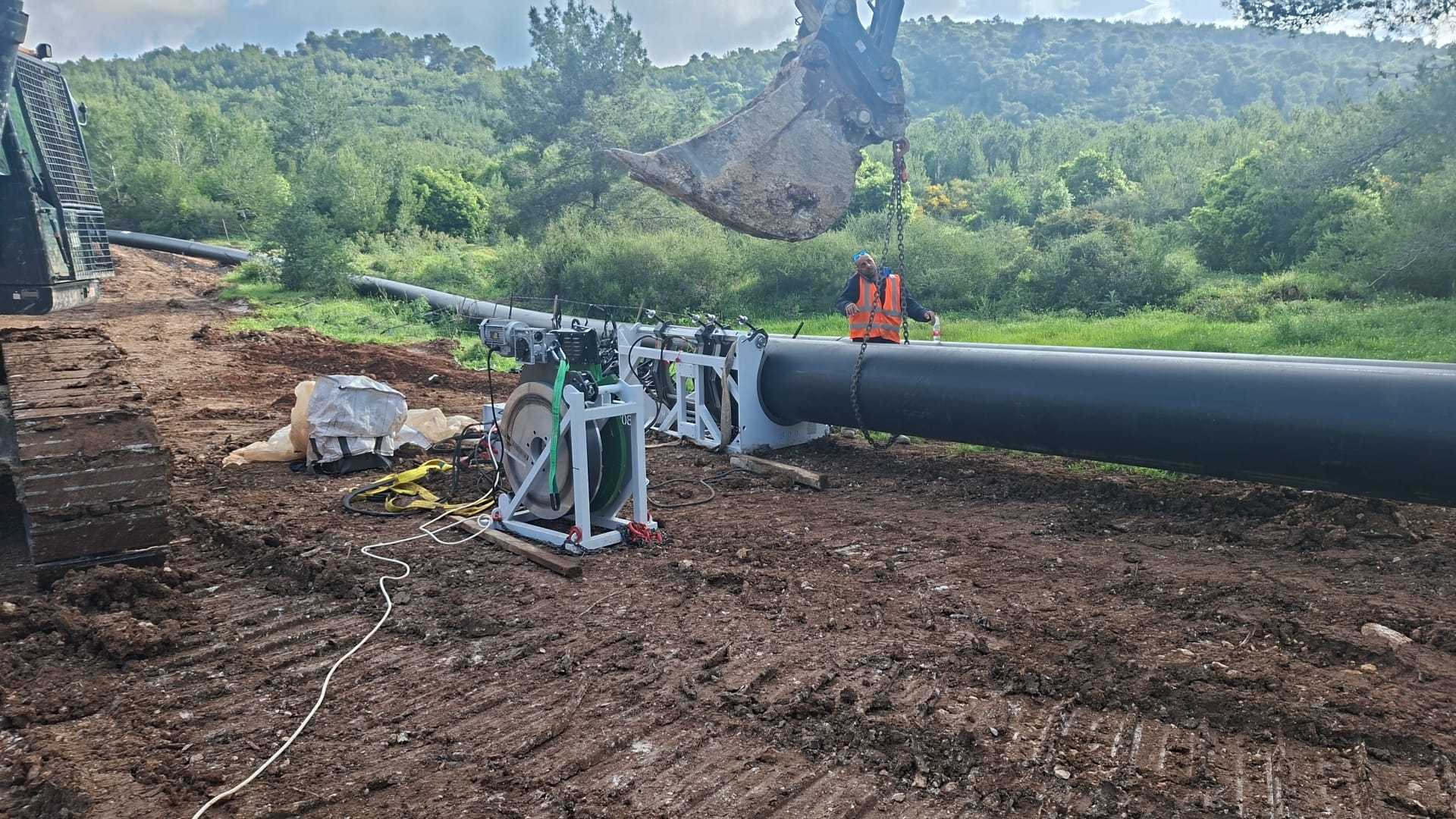
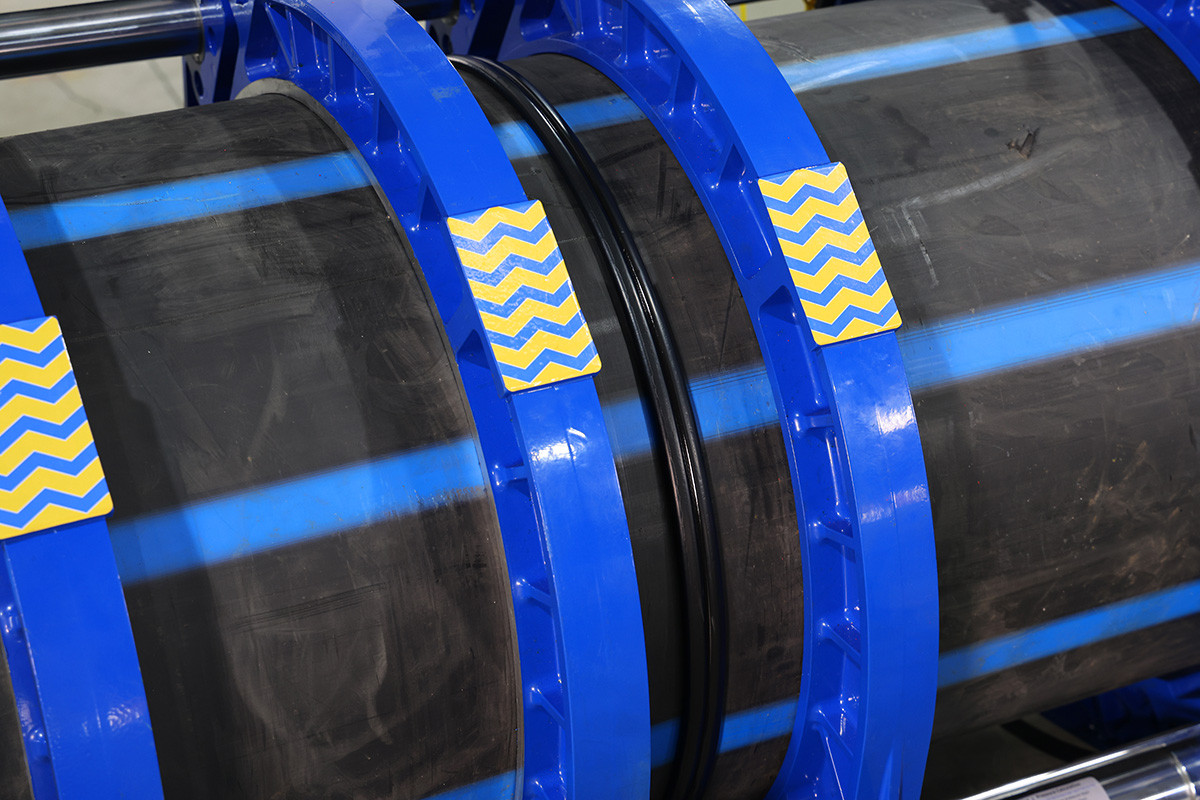
Customer Project: PE Pipe Butt Fusion Welding in Field Conditions
PE pipeline installation is often carried out in open construction environments where terrain, weather, and working conditions can vary significantly.
This field photo was provided by our customer during an actual pipeline installation project, showing the welding equipment operating in a real jobsite environment.
For large-scale pipeline construction, equipment stability, convenient operation, and precise pressure control all play an important role in maintaining efficient workflow and consistent fusion quality.
Improving Welding Quality Through Better Bead Evaluation
Butt fusion welding requires careful control of the entire welding process.
While bead appearance alone cannot fully represent the mechanical performance of a joint, it provides a practical way for operators to identify potential problems during field installation.
By understanding different bead profiles, operators can:
· Recognize abnormal welding conditions more quickly;
· Improve installation procedures;
· Reduce potential welding defects;
· Enhance long-term pipeline reliability.
For large-diameter PE pipeline projects, proper welding procedures, accurate parameters, and reliable equipment performance are essential for achieving high-quality butt fusion joints.