How to Choose the Right Butt Fusion Welding Machine: A Practical Buyer Guide
You are in the market for a butt fusion welding machine. Maybe you are a contractor expanding into HDPE pipeline work, a procurement manager stocking up for municipal projects, or an engineer tired of field failures from underspec equipment. If you have browsed the options lately, you already know there are dozens of brands and models out there. Manual, hydraulic, CNC. 160mm to 1600mm. Prices ranging from a few thousand to well over a hundred thousand dollars. So how do you pick the right one?
Why the Machine Choice Matters More Than You Think
A poor machine choice does not just waste money — it causes field failures that cost 10x to 20x the machine price in rework, excavation, and schedule delays. A single failed weld at pressure test can set you back $15,000 or more in repair costs alone. On the flip side, the global HDPE butt welding machine market is projected at roughly $685 million in 2026, growing at about 6.2% annually through 2035. Municipal water projects, gas distribution expansions, and mining infrastructure are the main drivers. As more regulators move away from visual-only weld inspection toward traceable digital records, the machines you choose today will either lock you in or lock you out of those jobs.
1. Match the Machine to Your Pipe Range
This seems obvious, but it is where most buyers go wrong. A machine effective range is usually the top 3 to 4 sizes below its maximum rating.
| Pipe Diameter | Recommended Machine | Typical Application |
|---|---|---|
| 63 - 160 mm | 160 class | Service lines, irrigation, residential |
| 90 - 315 mm | 315 class | Municipal water, gas distribution |
| 315 - 630 mm | 630 class | Transmission mains, mining, drainage |
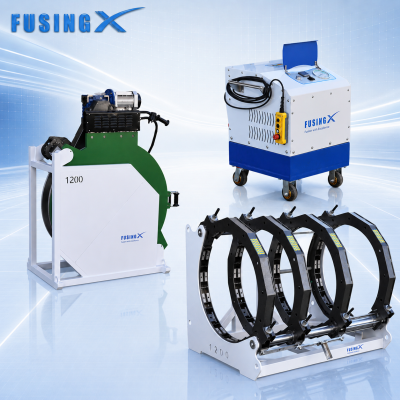
| 630 - 1200 mm | 1200 class | Major infrastructure, desalination |
Rule of thumb: If your main pipe size is 400mm, do not buy a 1600mm machine. Pick one where your pipe diameter falls in the middle of the machine range. Also check SDR compatibility — thick-wall pipes (SDR 7.4 or 9) need higher fusion force.
2. Manual, Hydraulic, or CNC?
Three levels of automation. Each has its place.
Manual machines (up to 160mm). Light, cheap, portable. Fine for small-diameter service lines. But weld consistency varies because everything depends on operator skill.
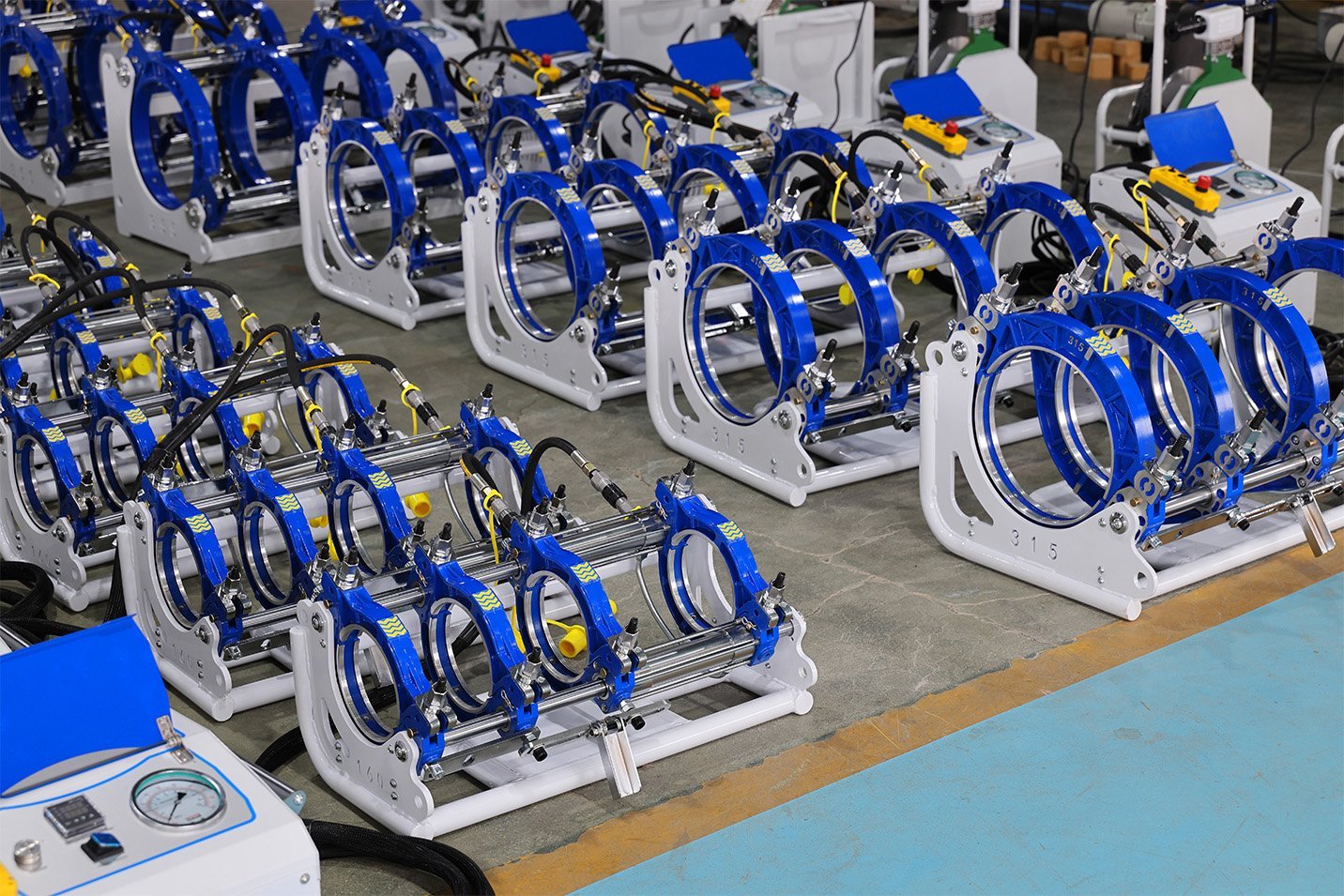
Hydraulic machines (160mm and up). The workhorse of the industry. Hydraulic control removes operator guesswork. Most experienced contractors will not touch a manual machine above 200mm. This is the sweet spot for most municipal and commercial work.
CNC / Fully automatic machines. Digital control, automated parameter selection, and data logging. If you are bidding on government or utility projects, this is increasingly non-negotiable. Over 45% of new installations in 2025-2026 are automated or semi-automated. The days of manual-only welding on big contracts are fading.
3. Standards Compliance Is a Deal-Breaker
| Standard | Region | Key Requirement |
|---|---|---|
| ISO 21307 | Global | Heating plate +/-3 C, 0.17 MPa or 0.52 MPa |
| ASTM F2620 | North America | 24h pressure test, +/-0.1 MPa hydraulic precision |
| DVS 2207 | Germany, industrial | Porosity under 0.4t, 10% cut-test sampling |
If you are exporting or working across multiple regions, choose a machine that supports multiple standard profiles. One overlooked detail: heater plate temperature uniformity. The spec says +/-5 C or better, but quality machines hold within +/-3 C across the entire surface. A plate that fluctuates more than that creates uneven melt pools and brittle joints.
4. Data Logging - From Nice-to-Have to Must-Have
The industry saying has shifted. It used to be "if it was not documented, it was not done." Now it is: "If it was not recorded, it was not welded."
Municipal water authorities and gas utilities increasingly mandate fusion records that include operator ID, job GPS location, ambient temperature, second-by-second pressure and temperature throughout the weld cycle, and a tamper-proof PDF report per joint. If you buy a machine without data logging capability — or at least a port for an external logger — you could find yourself disqualified from major tenders within 2-3 years.
5. Build Quality - What to Actually Check
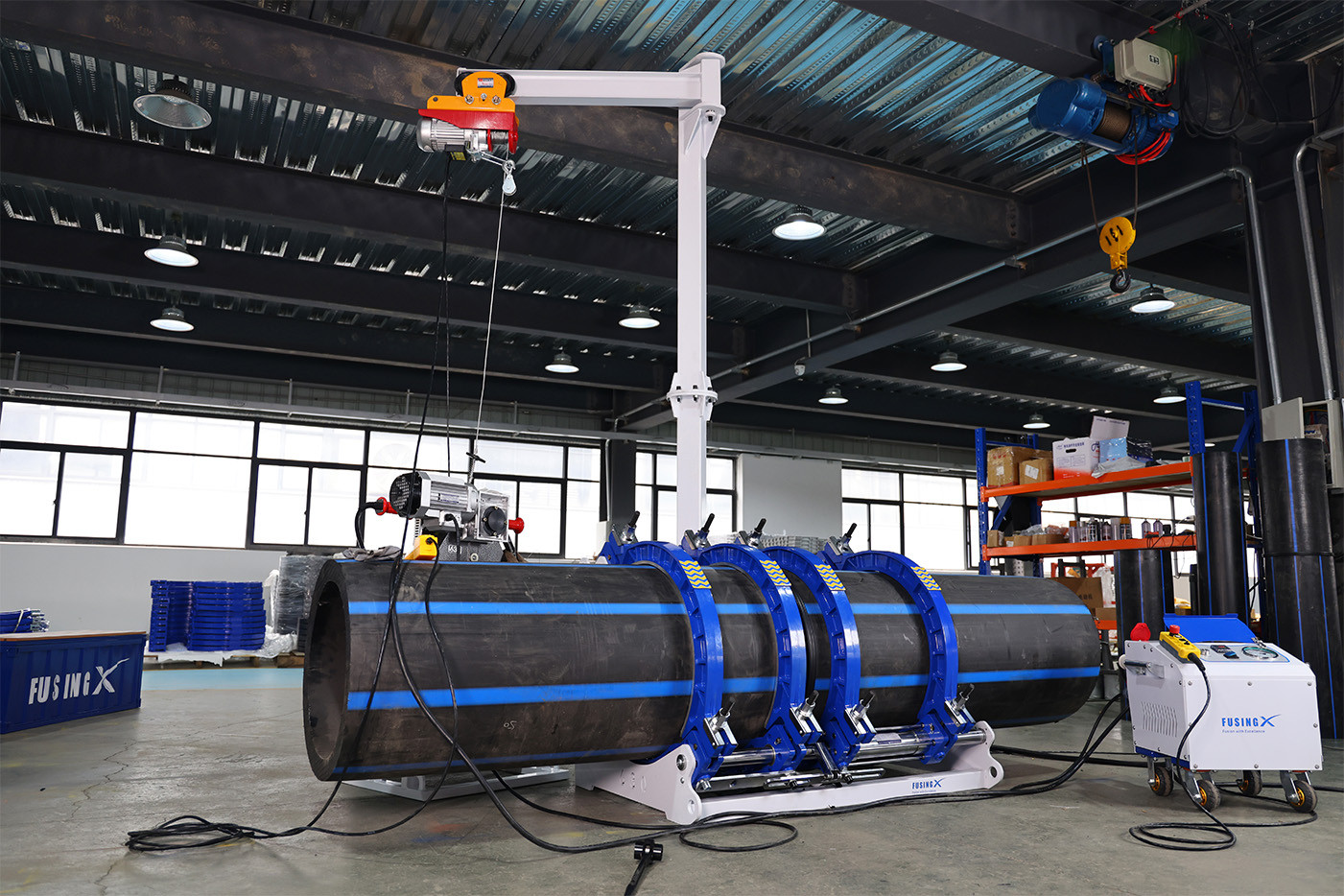
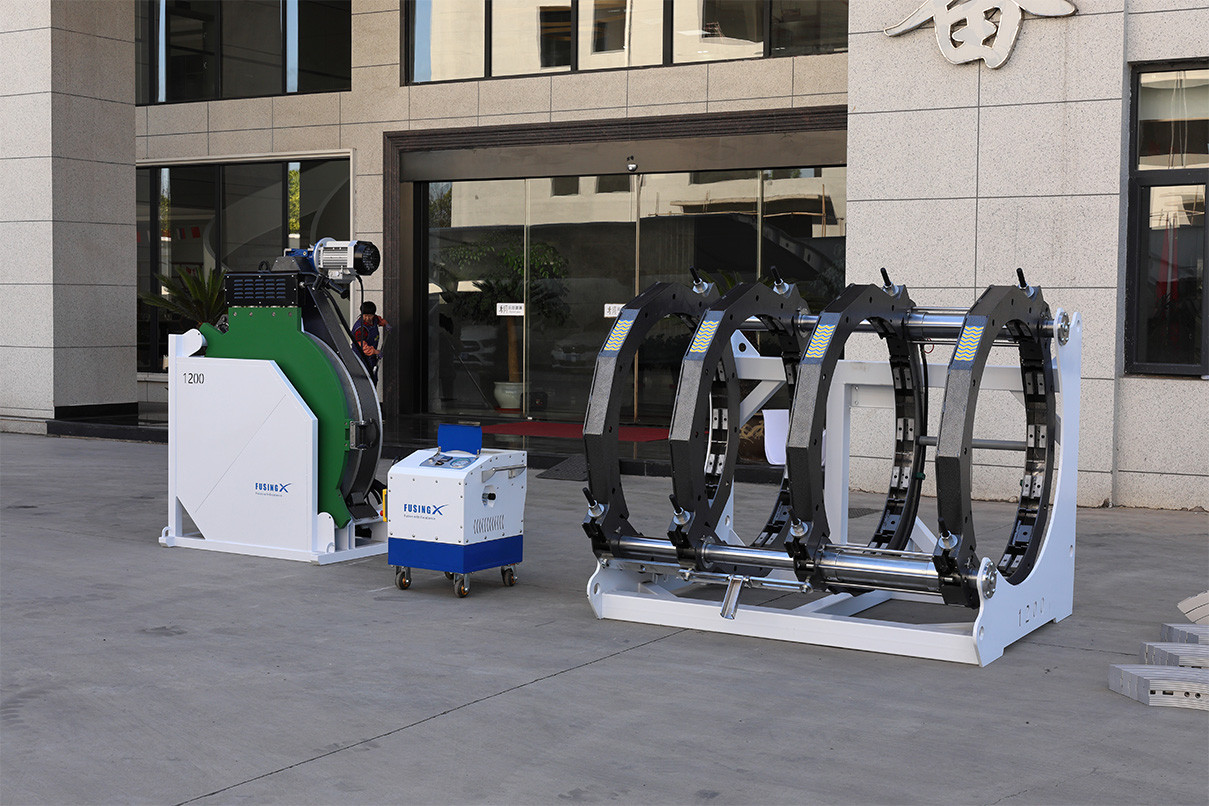
Spec sheets all look similar. Real build quality shows up in specific places. The chassis. When the machine clamps and presses a heavy pipe, a weak frame flexes — causing misalignment. Maximum allowable misalignment per ISO 21307 is 10% of wall thickness. Quality machines use CNC-machined aluminum alloy or steel frames. The clamp inserts. Single-size inserts reduce stacking and improve pipe alignment. Multi-size stackable inserts introduce play that affects weld quality. The heating plate. PTFE-coated, temperature deviation within +/-3 C. Replace every 2-3 years. The facer. Reversible carbide blades hold an edge longer than high-speed steel. Hydraulic seals. Inspect quick connectors and seals monthly — leaks waste time and ruin pressure control.
6. Do Not Forget the Generator
This is the most common field issue for hydraulic machines — an undersized generator. Generator capacity should be 1.5x to 2x the machine total rated power. A 315mm hydraulic machine draws about 5.85 kW total and needs a 7.5-10 kW generator. A 630mm machine needs 15-20 kVA 3-phase. Voltage drop is the enemy of electronics — keep extension cords heavy-gauge and short.
7. Evaluate the Supplier, Not Just the Machine
The machine is half the equation. The other half is what happens when something breaks. Ask about spare parts availability (within 2 weeks is ideal), technical support (language and time zone matter), training (on-site or video), warranty (look for 12-18 months minimum), and trial orders — reputable suppliers let you test 1-2 units before buying a fleet.
Budget Realistically
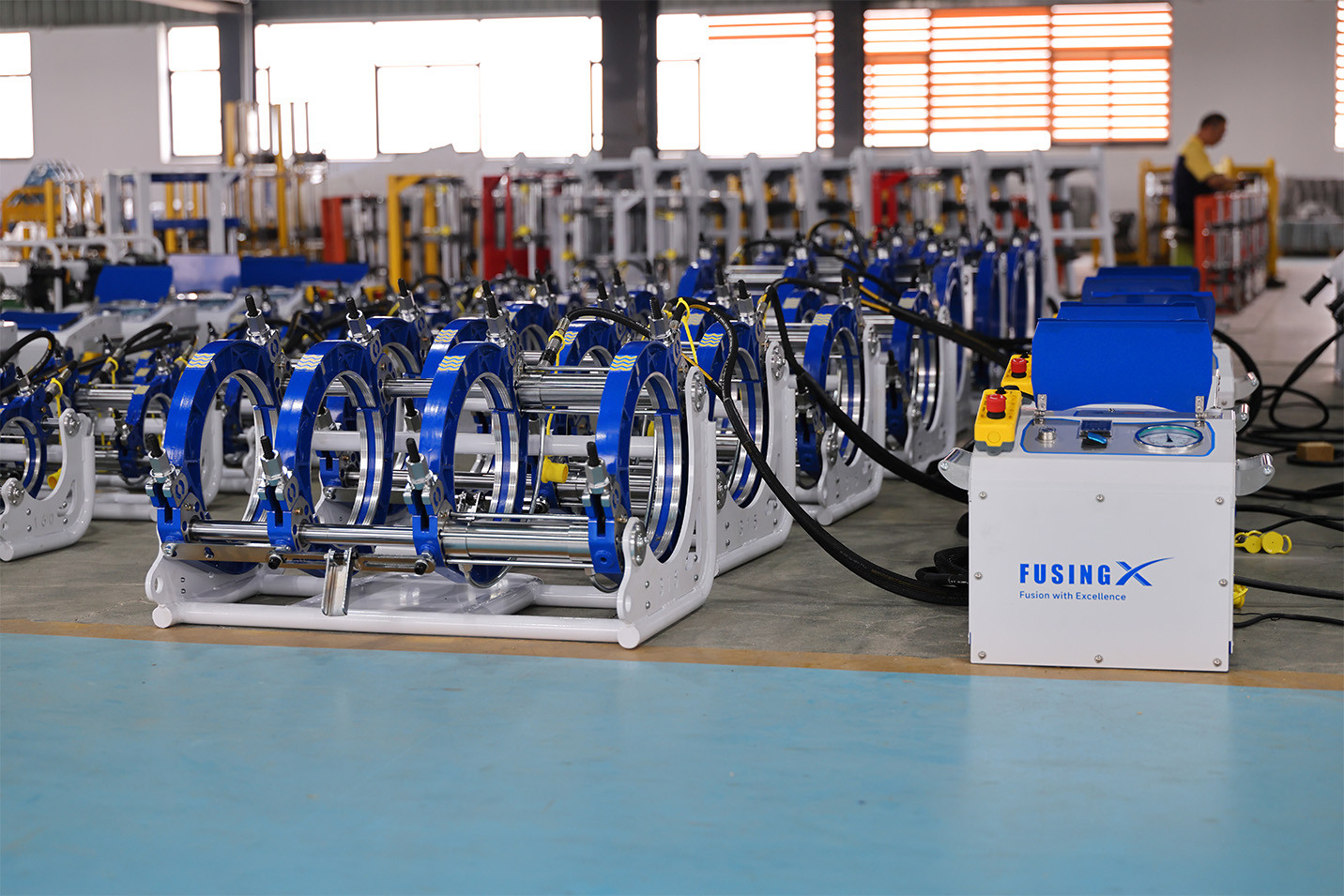
Manual machines start around $800-3,000. Hydraulic 315mm class runs $6,500-15,000. CNC machines cost $12,000-120,000+. The cheapest option rarely works out cheaper — a CNC machine can reduce joint failure rates by up to 60% compared to manual operation, which more than pays for itself on any sizable project.
Final Checklist
- Pipe diameter range matches your primary and secondary sizes
- SDR compatibility confirmed for typical wall thicknesses
- Automation level matches job requirements
- Relevant standards supported (ISO 21307 / ASTM F2620 / DVS 2207)
- Data logging built in or available as add-on
- Heater plate temperature uniformity within +/-3 C
- Chassis build quality verified (CNC-machined frame preferred)
- Spare parts availability confirmed (within 2 weeks)
- Supplier provides training and technical support
- Generator capacity calculated and confirmed
- Trial purchase option available
The Bottom Line
A butt fusion welding machine is a long-term investment — most machines last 10-15 years with proper maintenance. The cost difference between a mid-range and a premium machine is small compared to the cost of one project delay from a failed weld. Buy for the projects you want to win, not just the ones you have today. With data logging becoming mandatory and automation the new baseline, the machine you choose now will shape your bidding capability for the next decade.
Need help speccing a machine for your next project? Contact the FusingX team — we will walk through your pipe sizes, job conditions, and budget to find the right fit.